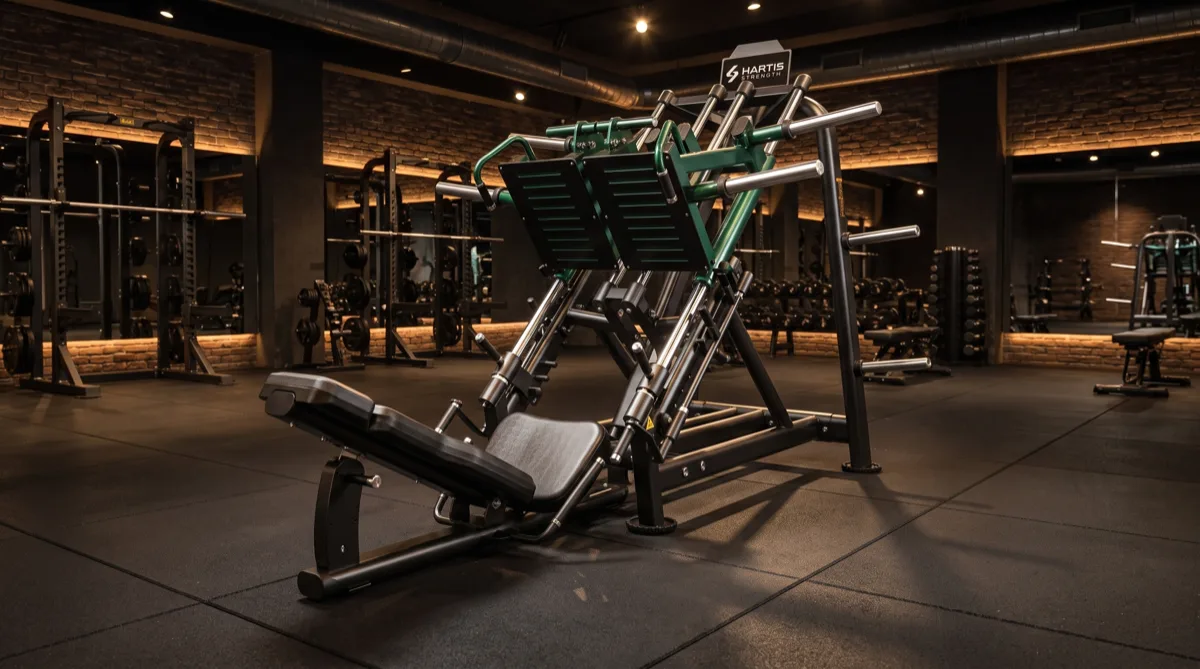
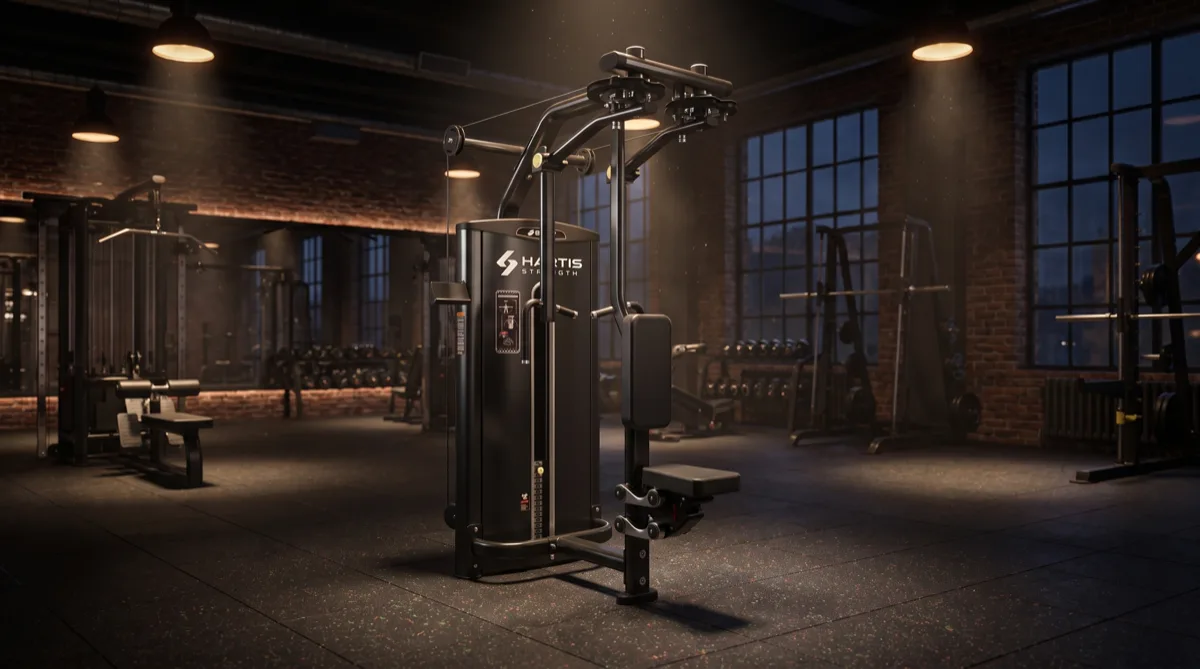
In modern commercial strength facility planning, the selectorised lat pulldown machine represents an irreplaceable cornerstone for upper-body hypertrophy and latissimus dorsi mechanical loading. While consumer-grade cable units rely on lightweight composite frames and friction-heavy plastic pulleys, true commercial-grade selectorised lat pulldown stations demand strict structural integrity, calibrated resistance curves, and zero-slop cable kinematics.
When global gym buyers, procurement officers, and fitness club operators evaluate strength machinery, their intent goes far beyond superficial aesthetics. Modern commercial procurement requires precise answers regarding pulley ratio physics, cable tensile fatigue limits, guide rod friction coefficients, frame tube metallurgy, and total cost of ownership (TCO). This guide addresses the exact technical parameters required to make an informed, ROI-driven manufacturing decision.
- 01
Direct 1:1 vs Dual 2:1 Cable Kinematics
Why single-station lat pulldown machines perform best with a 1:1 mechanical ratio, preserving tactile load feedback and eliminating cable slack across full range of motion.
- 02
EN ISO 20957-1 Class S Metallurgical Rigidity
Heavy structural tubing with 3.0 mm wall thickness welded under robotic laser-guided MIG protocols to withstand 500,000+ continuous fatigue cycles.
- 03
Magnetic Weight Stack & Pin Selection Mechanics
Machined cold-rolled steel weight plates fitted with self-lubricating bronze or PTFE bushings to eliminate chatter and binding under off-axis pulling vectors.
Request Detailed Technical Spec Sheet → 
 01Single Station