In the global commercial fitness manufacturing landscape, China has firmly established itself as the primary epicenter for heavy-duty strength equipment production. Commercial facility owners, franchised gym networks, and international distributors searching for the Top China Olympic Decline Bench Factories & Exporters face a complex sourcing matrix. Selecting an original equipment manufacturer (OEM) or original design manufacturer (ODM) requires evaluating structural engineering compliance, steel metallurgy standards, biomechanical vectoring, and long-term supply chain viability.
An Olympic decline weight bench represents a foundational piece of free-weight equipment engineered specifically to isolate the lower sternal head of the pectoralis major muscle while minimizing shoulder joint stress. Unlike residential or light-commercial utility benches, commercial-grade Olympic decline benches must conform to rigid structural load-bearing parameters, maintain mechanical stability under extreme multi-hundred-kilogram loads, and offer rapid ergonomics for elite athletes. Leading manufacturing clusters in Shandong (Dezhou/Ningjin region) and Jiangsu have refined automated production lines, utilizing 3D laser tube cutting and robotic MIG welding to mass-produce ISO-certified commercial strength lines that match European and North American engineering thresholds.
Direct factory-engineered commercial machinery, free weight storage systems, and specialized strength stations ready for international export.
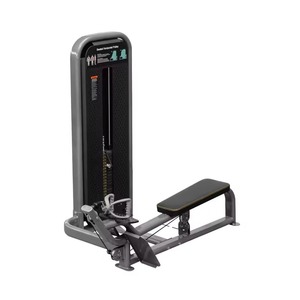
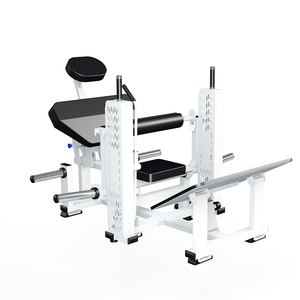
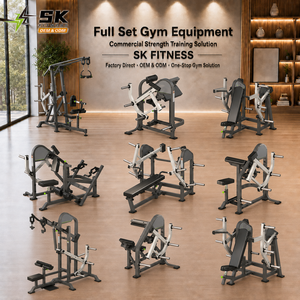
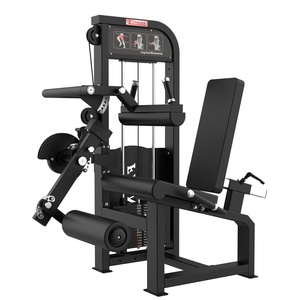
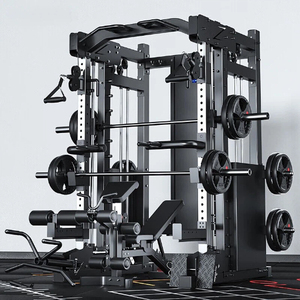
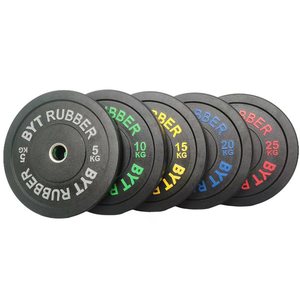
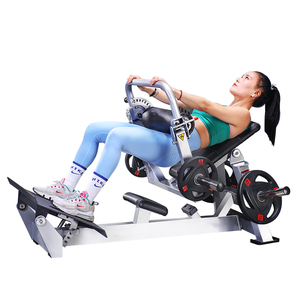
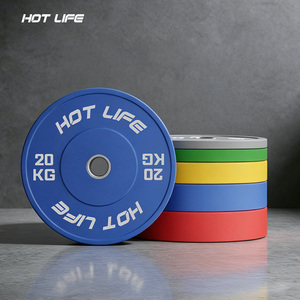
When procurement officers audit potential China Olympic Decline Bench Exporters, verifying factory claims against physical engineering attributes is essential. A failure in structural integrity under heavy loading poses severe liability risks for commercial fitness facility operators. Premier manufacturers differentiate themselves through specific engineering protocols:
Top-tier factories specify cold-rolled Q235 or Q355 structural steel tubing with a minimum wall thickness of 3.0mm (11-gauge). Frame profiles typically feature 50x100mm oval or rectangular tubing designed to resist torsional twist during asymmetrical barbell unracking.
Commercial decline benches operate at a fixed -15° to -20° decline angle. This specific angle optimizes lower pectoral activation without inducing excessive intracranial blood pressure during heavy valsalva maneuvers or compromising lumbar spine position.
Modern production facilities utilize CNC laser-cut stainless steel or heavy-duty molded polyurethane bar catches with multi-tier rack points. Integrated non-slip diamond plate spotter platforms ensure safe assistance for strength coaches.
Review the baseline hardware requirements below to evaluate vendor quotations during your factory RFP phase.
| Specification Parameter | Commercial Grade (Class S) | Light Commercial / Consumer | Inspection Protocol |
|---|---|---|---|
| Steel Frame Gauge | 11-Gauge (3.0mm) to 8-Gauge (4.0mm) | 14-Gauge (2.0mm) to 16-Gauge (1.5mm) | Ultrasonic Thickness Gauge |
| Frame Coating | Dual-stage electrostatic powder coat + zinc primer | Single coat wet paint or basic enamel | Cross-hatch adhesion & salt spray test |
| Upholstery Construction | High-density molded PU foam + recycled marine leather | Cut slab foam + thin vinyl cover | Durometer hardness testing (60–70 Shore A) |
| Bar Catch Materials | Molded TPU protection over 8mm solid steel plates | Bare metal or thin rubber stickers | Impact drop testing under load |
| Spotter Platform | Heavy-gauge textured diamond plate (bolted/welded) | Optional or lightweight steel wire mesh | Static load testing > 300 kg |
The manufacturing landscape in China for commercial strength equipment is undergoing a technological transformation driven by automation, material science, and custom branding requirements. Facility operators sourcing Olympic decline benches and strength lines should align with factories adopting these future trends:
Leading Chinese exporters have transitioned from manual TIG/MIG welding to multi-axis ABB or FANUC robotic welding cells. This shift ensures 100% weld penetration consistency, eliminates human error, and provides ultra-clean aesthetic seams across critical load points.
Gym franchises increasingly demand bespoke colorways to match brand guidelines. Modern Chinese factories offer low minimum order quantities (MOQ) for custom powder-coating (over 40 RAL finishes including matte, gloss, textured, and metallic) along with laser-cut stainless steel logo branding plates.
Traditional rubber bar catches and standard leather upholstery degrade rapidly under commercial usage. Next-generation equipment incorporates Thermoplastic Polyurethane (TPU) molded bar catches that dampen noise, prevent knurling damage to Olympic barbells, and resist cracking.
Environmental compliance regulations in China have elevated green manufacturing. Leading exporters utilize closed-loop powder-coating lines with high recovery efficiency and zero Volatile Organic Compound (VOC) emissions, ensuring compliance with global environmental standards.
When buying strength equipment from China, navigating middleman trading companies can lead to communication breakdowns, inflated margins, and unfulfilled warranties. HARTIS Strength (OÜ Prof Gym Equipment) combines decades of strength manufacturing experience with European operational transparency, providing direct accountability from initial CAD design to final installation.
Every strength frame and Olympic bench undergoes rigorous quality checks before dispatch. Welds, powder-coat thickness, bolt alignment, and static load limits are inspected against engineering drawings. EN ISO 20957 Class S compliance certificates are provided upon request.
We take the complexity out of international shipping. All quotations can be structured under DDP terms—handling sea freight, customs clearance, import duties, tariffs, and tail-lift delivery right to your facility floor in over 27 EU nations, the UK, UAE, and Southeast Asia.
Minimize facility downtime. Wear parts—including high-tensile cables, linear bearings, rubber bumpers, and hardware fasteners—are maintained in European distribution hubs for rapid 5-day dispatch, backed by founder Vasyl Ilkiv’s 10+ years of commercial industry leadership.
Submit your floor dimensions or project equipment list. Receive a complete machine proposal, 3D scaled layout, and transparent DDP price quote within 3 working days.
Send an InquiryStandard factory production cycles run between 30 to 60 days depending on order volume and custom powder-coat specifications. Transit via ocean freight adds 20 to 45 days based on destination ports in Europe, North America, or the Middle East.
Request an EN ISO 20957-1 Class S third-party test report (such as TUV, SGS, or Intertek). Class S certification requires static load testing at 1.5 to 2.5 times the maximum rated capacity without structural frame deformation.
Standard frame finishes (such as Matte Black, Anthracite Grey, or Silver) carry no MOQ. Custom RAL powder-coat colors typically require a minimum batch order of 6 machinery units across your total gym package.
To optimize container freight volume, benches are shipped in knock-down (KD) modular packaging inside reinforced plywood crates. Major structural frame uprights are pre-welded, requiring basic mechanical assembly of foot pads, catch pegs, and cushion mounts upon arrival.
Q235 steel offers yield strength suitable for high-durability commercial frames. Q355 steel provides higher yield and tensile strength, making it ideal for ultra-heavy-duty power cages and high-impact barbell catch rails.
HARTIS Strength maintains component-level warranties (10 years on welded frames, 1–2 years on wear items). Replacement vinyl cushions, bearings, and cables are dispatched directly from EU warehouse stock to avoid international shipping delays.
Essential safety features include adjustable leg anchor rollers to lock the user’s lower body, multi-position racking pegs for different arm lengths, anti-slip spotter platforms, and rubberized footpads to prevent floor slippage under heavy loads.
Yes. Consolidating plate-loaded machines, selectorised cable stations, power racks, Olympic decline benches, rubber bumper plates, and dumbbells into a single 20ft or 40ft HQ container maximizes freight efficiency and reduces per-unit shipping costs.
