Choosing the right back training equipment affects comfort, technique, and long-term progress. A Selectorised lat pulldown machine offers a controlled way to train the latissimus dorsi, especially for beginners and general fitness users. Its adjustable weight stack allows small, practical increases without loading loose plates. That can make each session easier to track.
The guided movement also provides a stable starting point. Users can adjust the seat, thigh pads, and handle position before pulling the bar toward the upper chest. This setup may reduce unnecessary movement and help maintain consistent repetitions. In busy gyms, that consistency is valuable. Coaches often use selectorised machines when teaching scapular control, elbow movement, and steady breathing.
Still, this machine is not automatically the best choice for everyone. A fixed path may feel restrictive for users with unusual shoulder mobility or previous discomfort. Poor seat adjustment can also shift tension away from the back. Small details matter. The shoulders should remain controlled, and the bar should not be pulled behind the neck.
A Selectorised lat pulldown machine supports measurable training, but it cannot replace thoughtful coaching. Results depend on range of motion, load selection, posture, and recovery. Some users may progress faster with cables, assisted pull-ups, or free-weight exercises. That is worth acknowledging.
This guide examines why many gyms choose this equipment, where it performs well, and which limitations deserve attention. The goal is practical judgment, not exaggerated promises.
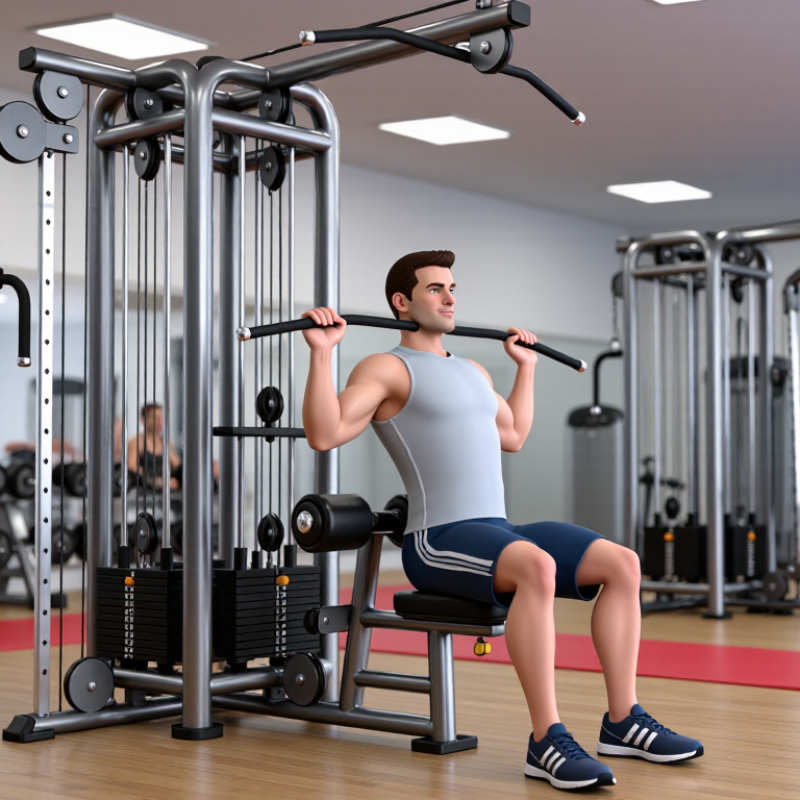
A selectorised lat pulldown machine is a strength-training station with a seat, thigh pads, overhead cable, and weight stack. The user selects resistance by inserting a pin, then pulls a bar or handles toward the upper chest. The cable-and-pulley system guides the load along a set path. No plate loading is needed.
That setup makes resistance changes quick and visible. A Health & Fitness Association report recorded 72.9 million US health-club members in 2022, indicating the scale of facility-based training, though it does not measure lat pulldown use specifically. In a gym, the machine’s numbered weight stack can help users track selected loads between sessions. Small details matter: adjust the thigh pads snugly, keep feet planted, and avoid leaning far backward as the bar descends.
The exercise mainly trains the latissimus dorsi, with the biceps and upper-back muscles assisting. It is not a perfect replica of a pull-up. The fixed seat and guided cable change how the body stabilizes, and machine designs differ in grip width and pulley feel. A useful starting point is a light load that allows a controlled pull to the upper chest and a slow return overhead. It should feel challenging, not jerky. Reference: Health & Fitness Association, 2023 Global Report.
A selectorised lat pulldown uses a stack of metal plates instead of loose weight discs. A pin selects the load by connecting the chosen plates to the cable. Push it fully into the marked slot before starting. The stack should lift cleanly, without plates catching or tilting.
The pulley system guides force from the handle to the stack. As you pull the bar down, the cable travels over pulleys and raises the selected plates. Pulley size and arrangement affect how far the handle moves and how heavy the resistance feels. On some machines, the handle travels farther than the stack, which can make the pull feel smoother but lighter. Check the machine’s instructions rather than assuming every number feels identical.
Sit with your feet supported and thighs held comfortably under the pads. Pull toward your upper chest, keeping your torso steady and shoulders controlled. A slight lean may feel natural, but swinging to move a heavier stack often shifts work away from the back. Let the plates lower under control; avoid letting them crash together. Small details matter. If the cable looks frayed, the pin feels loose, or the stack sticks, stop and ask staff to inspect it. A smooth machine helps, but it cannot correct rushed technique.
How its weight stack and pulley system affect the ideal force at the handle.
In an ideal 1:1 setup, handle force is approximately equal to the selected stack’s weight. In an ideal 2:1 setup, the handle force is approximately half the stack’s weight, while the handle travels twice as far. Real machines may differ because of pulley routing, friction, and mechanical design.
A selectorised lat pulldown mainly trains the latissimus dorsi, the broad muscles running down each side of your back. Your elbow bends as you pull the bar toward your upper chest, while your shoulder moves down and back. The biceps and other elbow flexors assist, and muscles around the shoulder blades help control the movement. It is a team effort. A study in the Journal of Strength and Conditioning Research comparing pulldown grips found that grip choice can change muscle activation, but no single grip isolates the lats completely.
The fixed cable path and weight stack make load changes simple, which can help beginners practise consistent repetitions. Keep your ribs steady, feet planted, and torso only slightly leaned back. Pull smoothly; avoid turning the movement into a swinging contest. The American College of Sports Medicine’s resistance-training guidance emphasizes controlled technique and progressive loading. Still, a machine cannot correct poor form for you. I sometimes see trainees pull behind the neck; that position is not necessary for training the back and may feel uncomfortable for the shoulders.
Tips: Start light and pause briefly when the bar reaches your upper chest. Let your arms extend under control, without shrugging hard at the top. If you feel sharp shoulder pain, stop and reassess your grip or range of motion.
A selectorised lat pulldown changes a workout through small, practical details. The weight pin makes resistance easy to adjust between sets. A lifter can move from a lighter warm-up to a working load without collecting plates or leaving the station. That matters when rest periods are short, or when several people share the machine.
The selected load is also easy to repeat. If a set of ten feels controlled at a particular setting, recording that setting gives a useful reference next time. It is not a perfect measure of progress; cables, seat position, and fatigue can affect how a set feels. Still, the numbered stack offers a more consistent starting point than guessing. A quick check of the pin helps prevent accidental changes.
Setup shapes the movement, too. Adjust the thigh pad so it holds the legs comfortably, then sit tall and grip the bar evenly. Pull toward the upper chest without leaning far back or jerking the handle. The stack should rise and lower smoothly. A little noise is normal. A sudden clank may mean the weight is being dropped, not controlled. This design makes training simpler, though it cannot choose good technique for you. That part takes attention.
A selectorised lat pulldown should fit the people who will use it, not just the room it occupies. Check the seat and thigh pads: they should adjust securely and hold your legs without pressing painfully. A stable frame matters when the weight stack moves. Try the machine, if possible, and notice whether the cable travels smoothly from the first repetition to the last. Small catches can become distracting.
Tips: Check the weight increments and labels. Make sure users can change the pin while seated, without reaching awkwardly. Inspect the handle options, cable, pulleys, and visible welds. Ask how routine maintenance is handled. A quiet machine is nice, but smooth movement and reliable adjustments matter more.
Measure the footprint, including space for users to enter, adjust the seat, and pull the bar down safely. Compare the machine’s maximum load with likely training needs, while remembering that a higher number alone does not guarantee better performance. Clear instructions can help new users set their thighs and grip correctly. I have seen people skip these adjustments when they feel rushed; that can make the movement less comfortable. A short trial with different users may reveal fit issues that a specification sheet misses.
A pin connects selected metal plates to the cable. Push it fully into the marked slot. The plates should lift smoothly.
Pulleys guide the cable as you pull the handle down. Handle travel and resistance can vary between machines. Check the instructions.
It mainly works the latissimus dorsi muscles along your back. Your biceps and muscles around the shoulder blades also assist. It is a team effort.
Plant your feet and adjust the thigh pad to hold your legs comfortably. Keep your torso steady and lean back only slightly.
Pull it toward your upper chest with a smooth motion. Pause briefly, then let your arms extend under control.
Grip choice can change which muscles work more, but no grip isolates the lats completely. Choose one that feels comfortable.
Note the selected weight and repetitions, such as ten controlled pulls at one setting. It is a useful reference, not a perfect measure.
Stop if the cable looks frayed, the pin feels loose, or the stack sticks. Ask staff to inspect it. Don’t force it.
Swinging can shift effort away from your back. Pulling behind the neck is unnecessary and may bother your shoulders. Technique deserves another look.
A Selectorised lat pulldown machine uses a pin-adjustable weight stack connected to a pulley and cable, letting users choose resistance quickly without changing plates. As the bar is pulled down, the pulley system guides the movement and provides a controlled way to train the latissimus dorsi, while also engaging the biceps, upper back, and shoulders. The seated position and adjustable thigh pads help users stay supported and focus on a smooth, consistent pull.
The selectorised design makes it easier to change loads between exercises or sets, which can suit beginners and experienced lifters alike. When choosing a machine, consider its range of resistance, smoothness of cable travel, seat and thigh-pad adjustments, grip options, stability, and available floor space. A well-matched machine can make lat pulldowns comfortable, practical, and easy to include in a balanced strength-training routine.