Choosing the right Commercial pec fly machine can shape how members train their chest, move through a workout, and share limited floor space. In a busy gym, small details matter: a seat that adjusts without a struggle, handles that feel secure, and a weight stack that moves smoothly. Comfort matters.
This guide to the Top 10 Commercial Pec Fly Machines for Gyms compares practical features rather than relying on appearance alone. It considers frame stability, adjustment range, motion feel, footprint, maintenance needs, and the experience of different users. A machine should support controlled repetitions without forcing awkward shoulder positions. Still, comfort and fit vary from person to person, so a showroom trial can reveal issues a product description misses.
There is no single best choice for every facility. A compact studio may prioritize a smaller footprint, while a high-traffic fitness center may need durable upholstery and straightforward adjustments. Budget matters, but so do service access and replacement-part availability. These points are easy to overlook.
The models ahead offer different strengths and trade-offs. Use the comparisons to build a shortlist, then check manufacturer specifications and warranty terms before purchasing. If possible, test the seat, handles, and resistance path with several users. A ranking can help organize options, but it cannot predict how a machine will feel in your gym.
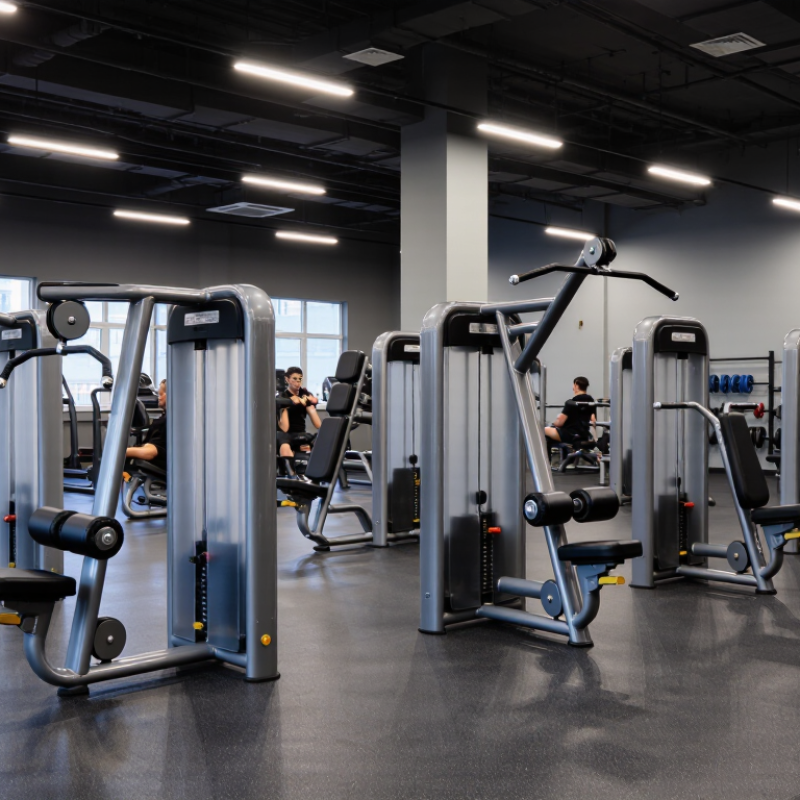
A commercial pec fly machine is a seated resistance unit designed to train the chest through horizontal shoulder adduction. You sit against a back pad and hold two handles. As the arms move inward, the pectoralis major contracts to bring the upper arms toward the chest. The machine’s cam, cable, or weight stack controls resistance across the movement. This design offers a guided path, which can help beginners maintain consistent form. It also suits busy gyms because users can adjust the seat, select a load, and start quickly. The 2024 ACSM Worldwide Survey ranked traditional strength training among the leading fitness trends, showing continued demand for accessible resistance equipment.
Commercial models usually use reinforced frames, sealed bearings, thick upholstery, and weight stacks built for repeated daily use. However, “commercial” does not guarantee perfect biomechanics. A seat set too low can place the shoulders in an awkward position. Excessive weight may also shift stress from the chest toward the front shoulder. In practice, trainers should watch the user’s elbow path, back contact, and controlled return. The American College of Sports Medicine recommends progressive resistance and controlled technique rather than chasing heavy loads. Small adjustments matter.
Tips: Set the handles near mid-chest height. Keep your elbows slightly soft. Pause briefly when the handles meet. Return slowly for two or three seconds. Do not force a deep stretch. Record maintenance checks, because loose cables and worn pads can change the machine’s feel. That detail is often missed. Fitness facilities should compare adjustability, accessibility, and service records, not only the advertised weight capacity.
A pec fly machine guides the arms through shoulder horizontal adduction to train the chest. This chart shows an example controlled repetition tempo: a 2-second return, a 1-second pause, and a 2-second inward press. It illustrates the movement, not a machine-specific performance measurement.
When evaluating pec fly machines for gyms, start with movement quality, not appearance. The handles should follow a natural arc without forcing the shoulders backward. A stable seat and adjustable back pad help users of different heights maintain proper alignment. Check whether the resistance feels smooth at the beginning, middle, and end of each repetition. Uneven loading can reduce training quality and irritate vulnerable joints.
Frame construction matters during busy commercial use. Look for reinforced welds, thick upholstery, protected pivot points, and durable adjustment pins. The machine should remain steady when a strong user changes direction quickly. Test the seat, handles, and range-of-motion stops in person when possible.
I have found that small rattles often reveal future maintenance problems. Still, visual inspection is not enough. Review service access, replacement-part availability, and the manufacturer’s maintenance guidance. Some machines feel excellent on day one but become inconvenient later.
Tips: Ask several users to test the machine before purchasing. Compare shoulder comfort, reach, resistance control, and entry difficulty. Leave enough space for safe movement around the equipment. Measure the footprint with the arms fully extended, not folded. Keep a simple inspection log for bolts, cables, upholstery, and unusual sounds. Do not ignore user feedback. A technically impressive machine may still fail if members avoid using it.
Choosing a commercial pec fly machine means looking beyond its padded seat and polished frame. For busy gyms, a stable base, smooth cable travel, and adjustable starting positions matter every day. Members should be able to set the arms comfortably without twisting their shoulders. Check that the weight stack moves quietly and that the machine feels steady during both opening and closing motions. Small details count.
When comparing ten machines, assess footprint, adjustment range, service access, and the clarity of the weight markings. A compact model may suit a crowded training floor, but its arm path might not fit every user. Try the machine with different body sizes, not just one staff member. Even a well-built unit can feel awkward. I learned that the hard way.
Tips: Inspect cables, pulleys, upholstery seams, and adjustment pins on a regular schedule. Ask users whether the handles feel comfortable at full stretch. Keep enough space around the machine for safe entry and exit. Record maintenance issues, even minor ones; a squeak can be an early warning, though not always.
Top 10 Commercial Pec Fly Machines for Gyms
Comparing the top ten requires more than checking frame size or listed load. On a busy gym floor, I test seat height, arm reach, pad comfort, and cable smoothness. A user should align the handles with mid-chest without lifting the shoulders. Tool-free adjustments save time between members. Clear adjustment markers help users repeat a consistent setup. Small details often decide whether equipment feels professional.
Training performance depends on resistance through the full movement. I look for steady tension near the starting stretch and controlled closure. Handles should move independently when possible, helping users address left-right strength differences. A stable chest pad reduces unwanted torso movement. Excessive momentum is a warning sign. It usually means the machine is poorly matched to the user or too easy to control.
Durability also affects the comparison. Inspect welds, upholstery seams, bearings, and access to service points. Thick padding can feel supportive, but overly soft foam may reduce positioning accuracy. Noise matters. Fit matters. A quiet pivot feels better and may suggest careful construction, though sound alone proves little. I still question fixed-arm designs, because they may suit some bodies and frustrate others. The best choice depends on member height, coaching style, traffic, and available maintenance time.
| Rank | Commercial Configuration | Resistance Type | Seat and Arm Adjustability | Typical Resistance Range | Approx. Footprint | User Capacity | Training Performance and Best Use |
|---|---|---|---|---|---|---|---|
| 1 | Dual-Function Pec Fly / Rear-Delt Machine | Selectorized weight stack | 5–8 seat-height positions; rotating arms or dual start positions | Approximately 5–100 kg | About 145 × 120 × 160 cm | Up to 150 kg | Provides strong versatility for chest and posterior-shoulder training. Independent arm movement can improve balance between sides and is suitable for high-use commercial facilities. |
| 2 | Independent-Arm Pec Fly | Selectorized weight stack | 6–9 seat positions; independently adjustable arm starting angles | Approximately 5–100 kg | About 135 × 125 × 155 cm | Up to 150 kg | Delivers a controlled bilateral or unilateral chest press-out pattern. Independent handles help reduce compensation and make the unit useful for progressive hypertrophy training. |
| 3 | Standard Seated Pec Deck | Selectorized weight stack | 5–7 seat-height positions; fixed or limited arm-start adjustment | Approximately 5–90 kg | About 125 × 115 × 155 cm | Up to 150 kg | A space-efficient choice for reliable chest isolation. The guided path is easy to learn and supports consistent repetitions for general members and supervised programs. |
| 4 | Chest Fly with Adjustable Starting Range | Selectorized weight stack | 6–10 seat positions; 3–6 arm-start settings | Approximately 5–110 kg | About 150 × 125 × 160 cm | Up to 160 kg | Allows users to select a more comfortable stretch and finishing position. It is particularly useful when a facility serves members with different shoulder mobility levels. |
| 5 | Rear-Delt Convertible Pec Fly | Selectorized weight stack | 5–8 seat positions; reversible handles or rotating arm assembly | Approximately 5–100 kg | About 140 × 125 × 160 cm | Up to 150 kg | Combines anterior and posterior shoulder-plane exercises in one station. This configuration can increase floor efficiency while maintaining a stable, machine-guided movement. |
| 6 | Plate-Loaded Pec Fly | Olympic or standard weight plates | 4–7 seat-height positions; adjustable start angle on many configurations | User-loaded; commonly 2.5–100+ kg | About 145 × 135 × 150 cm | Often up to 180 kg | Offers a simple mechanical design and a broad loading ceiling. It is well suited to strength-focused areas, although plate changes require more time than a selectorized unit. |
| 7 | Counterbalanced Pec Fly | Selectorized weight stack with assisted start | 5–8 seat positions; counterbalanced arms with fixed or adjustable start | Approximately 2.5–90 kg | About 130 × 115 × 155 cm | Up to 150 kg | The assisted arm design reduces the effort needed to enter the starting position. It is a practical option for beginners, older adults, and facilities emphasizing controlled access. |
| 8 | Compact Wall-Side Pec Fly | Selectorized weight stack | 4–6 seat positions; limited arm-start adjustment | Approximately 5–80 kg | About 115 × 105 × 155 cm | Up to 135 kg | Uses less floor space than larger commercial units and works well in hotel gyms, apartment gyms, and smaller training rooms. It generally provides less range customization. |
| 9 | Heavy-Duty Independent Pec Fly | High-capacity selectorized weight stack | 6–9 seat positions; independent arms with multiple start settings | Approximately 5–120 kg | About 155 × 130 × 165 cm | Up to 180 kg | Designed for frequent use and heavier training loads. The larger frame and reinforced pivot areas can improve stability during demanding sessions, but the machine requires more floor area. |
| 10 | Low-Profile Dual-Station Pec Fly | Selectorized weight stack | 4–7 seat positions; shared or separate arm adjustments | Approximately 5–90 kg | About 130 × 110 × 155 cm | Up to 150 kg | Balances a modest footprint with dependable isolation work. It is appropriate for multi-purpose fitness floors where equipment accessibility and efficient traffic flow are priorities. |
A commercial pec fly machine should feel stable before it feels impressive. During gym inspections, I check the frame, seat adjustment, handles, and movement path for looseness. The machine must support controlled motion without sudden stops or side-to-side rocking. Guards should cover pinch points, while labels should explain adjustments clearly. A clear instruction panel helps reduce rushed, unsafe use.
Maintenance affects both safety and member confidence. Staff should inspect cables, pulleys, bolts, welds, and upholstery on a scheduled basis. Worn cable coatings, cracked pads, or unusual scraping sounds deserve immediate attention. Clean contact surfaces daily, but use products approved for synthetic upholstery and metal finishes. Lubricate moving joints only as directed by the equipment maker. Excess lubricant can collect dust and create another problem.
Buying decisions need more than a low price. Compare the machine’s weight capacity, adjustment range, footprint, service access, and replacement-part availability. A compact unit may suit a small studio, but limited clearance can make inspections difficult. I once underestimated how quickly a busy facility would wear its seat padding. That mistake changed my purchasing checklist. Ask about commercial-use testing, warranty response times, and technician support in your area. Test several machines with different body types before ordering. Comfort is not universal. A machine that feels perfect for one member may place another user’s shoulders in an awkward position.
It trains the chest as the arms move inward across the body. The pectoralis major helps draw the upper arms toward the chest.
A cam, cable, or weight stack controls resistance along a set path. Guided movement can help beginners repeat each exercise. It is not foolproof.
Set the handles near mid-chest height. Keep your back against the pad and your elbows slightly bent. Small adjustments matter.
Pause briefly when the handles meet, then return slowly for two or three seconds. Avoid forcing a deep stretch.
Pick a load you can move smoothly without changing your form. Too much weight may shift stress toward the front shoulder.
Look for a stable frame, durable upholstery, protected pivot points, and sturdy adjustment pins. Check cables and welds, too. Looks can mislead.
Ask users of different heights to try the seat, reach, and movement. Shoulder comfort and easy entry matter. One size rarely suits everyone.
Measure the space with the arms fully extended. Log checks for bolts, cables, worn pads, and unusual rattles. That detail is often missed.
No. Test resistance through the full movement and review service access and replacement-part availability. I may give quiet operation too much weight, but rattles still concern me.
This guide explores what a Commercial pec fly machine is and how it supports controlled chest workouts in a gym setting. By bringing the arms together against adjustable resistance, the machine helps users target the pectoral muscles while maintaining a stable posture. The article explains the key factors gym owners should evaluate, including frame durability, movement quality, weight-stack design, seat and handle adjustability, user comfort, space requirements, and suitability for different training levels.
It also presents a practical selection of the top 10 commercial pec fly machines for gym use without focusing on brand names. Readers will learn how to compare features, adjustability, range of motion, training performance, and ease of use. Additional guidance covers proper safety practices, routine cleaning, cable and upholstery inspections, maintenance planning, warranty considerations, installation needs, and total ownership costs, helping gym owners choose reliable equipment that can support consistent member training and long-term facility operation.