0%

Choosing a commercial leg press machine is not simply a matter of comparing prices or polished product photos. The machine must suit your facility, members, maintenance capacity, and available floor space. In a busy gym, a stable platform, smooth carriage, and comfortable back pad can affect every training session. Small details matter. A thick seat cushion may reduce discomfort during repeated sets, while accessible safety handles can improve user confidence. This guide presents seven practical tips for evaluating construction, weight capacity, movement quality, adjustability, safety, maintenance, and supplier support. It focuses on decisions that can be checked before installation, not promises that sound impressive in a brochure.

A closer inspection often reveals more than specifications alone. Ask how the frame was tested, whether replacement parts remain available, and how the warranty handles commercial use. Measure doorways and ceiling clearance before ordering. A powerful machine is still a poor choice if installers cannot position it safely. Consider the plates your gym already owns, because unusual loading requirements can create unnecessary costs. Try the sled with different body sizes when possible. A machine that feels smooth for one tester may feel restrictive for another. No buying checklist is perfect. User preferences, training styles, and repair histories can differ widely. Still, careful comparison helps reduce avoidable mistakes and supports a more reliable investment for your members and staff.
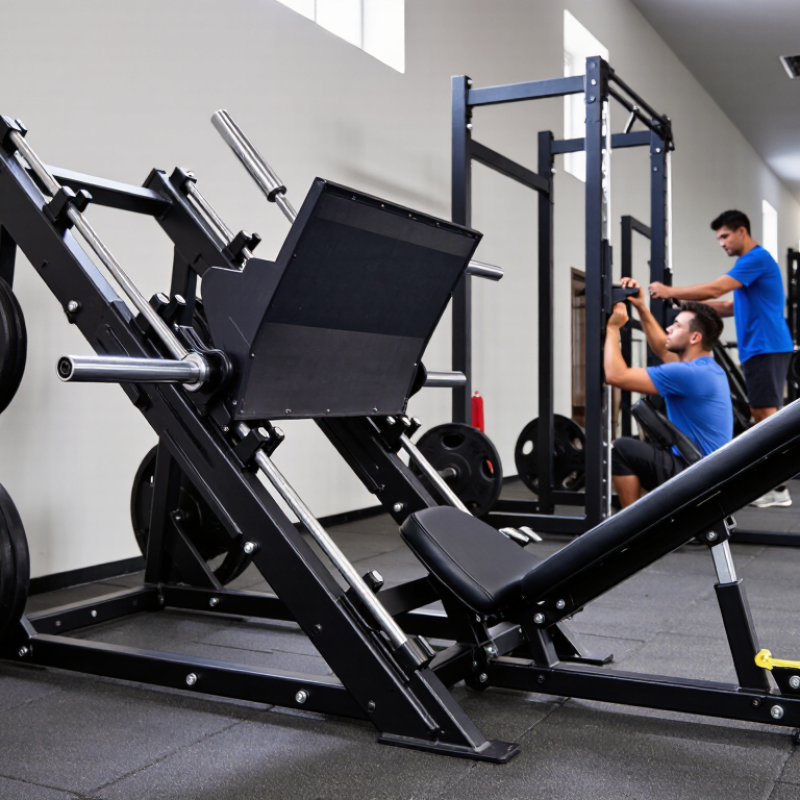
7 Tips for Buying a Commercial Leg Press Machine

Define Facility Needs: User Volume, Footprint, and Seven Buying Criteria

Buying a commercial leg press machine starts with facility needs, not catalog photos. The 2024 Global Health and Fitness Association report estimated 184 million club members worldwide in 2023. High traffic demands durable equipment. Count peak-hour users, not average attendance. Then measure the training zone, including plate storage, walkways, and emergency clearance. A machine may fit on paper and still block a busy aisle.

Use seven buying criteria: user capacity, footprint, frame strength, load rating, adjustability, safety, and service support. ACSM’s 2024 Worldwide Survey of Fitness Trends ranked traditional strength training among the leading industry trends. That supports investing in equipment many members understand and use. Check seat angles, range-of-motion limits, handle positions, and entry height with different users. Test the carriage under load. Smooth travel matters. So does predictable stopping. Inspect welds, bearings, upholstery, and protective guards. Ask for maintenance intervals, replacement-part availability, and written warranty terms. Service delays can turn one machine into expensive floor decoration. Not glamorous.

Do not choose the heaviest model automatically. Excess capacity can increase cost, footprint, and installation demands. Review actual member behavior, including beginners who may need simple adjustments. A seven-degree comfort difference can matter during repeated sets, but marketing claims still need verification. Record trial feedback from coaches and members. Recheck your assumptions after two weeks. The first layout is rarely perfect.

Verify Commercial Compliance: ISO 20957-1 Class S and ASTM F2276

A commercial leg press machine should withstand repeated use, varied users, and demanding gym schedules. Verify compliance with ISO 20957-1 Class S for professional and studio environments. This classification relates to safety, stability, construction, and testing requirements. Ask for documentation covering the exact model, not a similar product. A certificate with no model reference is weak evidence.

Tip 1

Request the complete test report. Check the testing date, laboratory details, machine identification, and applied load. ASTM F2276 can support evaluation of fitness equipment safety and performance requirements. It should not replace practical inspection. Look closely at welds, frame movement, guards, footplate texture, and carriage travel. Small defects matter.

Tip 2

Test the machine under realistic conditions. Adjust the seat, load several plates, and check whether movement remains smooth. Listen for scraping or sudden clicks.

Tip 3

Confirm safety labels, maintenance instructions, emergency procedures, and stated user limits. These details are easy to overlook. I have seen polished equipment fail basic usability checks. Compliance documents build confidence, but they cannot reveal every awkward adjustment or poor access point. Ask an independent technician to review the machine before purchase.

Compare 45° Sled Design, Range of Motion, and Adjustability

A commercial leg press should match real training demands, not showroom drama. The CDC reported that only 26.3% of U.S. adults met both aerobic and muscle-strengthening guidelines in 2022. Reliable lower-body equipment can support consistent strength work, but poor geometry may discourage it.

Inspect the 45° sled first. Its angle affects loading, foot pressure, and how easily users control the descent. Choose a wide, rigid carriage with smooth bearings and minimal side play. Check the published load rating, frame steel, weld quality, and platform dimensions. Bigger is not always better. A very heavy sled can feel impressive yet move poorly under lighter users. Ask for maintenance records, not only a sales demonstration.

Measure the range of motion with several body sizes. The bottom position should allow controlled knee and hip flexion without forcing the pelvis to round. The top should provide a clear lockout stop, but not encourage aggressive joint locking. Adjustable backrests, shoulder pads, and safety catches improve fit across a busy facility. The NSCA recommends controlled resistance training with appropriate technique and individualized progression; adjustability makes that practical. Test the machine when the sled is empty and loaded. Listen for scraping. Notice the first few inches. Those details are easy to miss, and I have sometimes judged equipment too quickly by its finish. Ask whether replacement rollers, pads, and cables remain available locally. A machine that cannot be serviced is an expensive interruption.

Commercial Leg Press Buying Benchmarks

These benchmark values represent common commercial design targets rather than any specific company or brand. A 45° sled, approximately 700 mm of carriage travel, multiple backrest settings, and adjustable safety stops are useful reference points when comparing range of motion, user fit, safety, and long-term usability.

Audit Capacity: Rated Resistance, Plate Storage, and Safety Clearances

When auditing a commercial leg press machine, begin with its rated resistance. Check whether the rating refers to plate load, carriage load, or total resistance. These figures are not always comparable. Ask for technical documentation and inspect the frame, rails, and pivot points. I once focused too heavily on maximum load and missed how sharply the carriage accelerated near the starting position. Test several load levels with an experienced trainer present. Numbers can mislead.

Plate storage deserves equal attention. Count the storage posts and compare them with your busiest training periods. Full posts should remain stable, without plates touching nearby handles or moving parts. Check the post diameter, welded joints, and access height. Storage that sits too low can strain staff during loading. It seems minor, but daily handling exposes weak design quickly. Leave spare capacity for heavier plates later.

Safety clearances must be measured with the machine fully loaded and fully reclined. Allow room for foot placement, seat adjustment, emergency access, and normal user movement. Mark the floor temporarily with tape before installation. This reveals awkward traffic paths better than a showroom inspection. My early checklist ignored rear clearance, which created a tight corner beside another machine. A qualified installer should verify anchoring, floor condition, and local safety requirements. Recheck these measurements after the room becomes busy.

Calculate Lifecycle Value: Warranty Terms, Maintenance, and 10-Year TCO

A commercial leg press machine should be judged by its ten-year cost, not its purchase price. Record the equipment price, delivery, installation, flooring, inspections, repairs, and electricity. A simple TCO worksheet exposes expensive details. For example, a $6,000 machine may require $500 installation, $300 annual maintenance, and $1,200 in replacement parts over ten years. That already creates a $10,700 ownership cost, before downtime.

Tip 1: Read the warranty line by line. Check coverage for the frame, carriage, cables, bearings, upholstery, and labor. A long frame warranty may sound impressive, but a one-year labor term can create unexpected costs. Confirm who pays shipping for heavy replacement parts. Ask how quickly service requests are normally handled. Get the answers in writing.

Tip 2: Build a realistic maintenance schedule. In busy facilities, guide rods collect dust, bolts loosen, and upholstery wears faster than expected. Ask for lubrication points, inspection intervals, and approved replacement procedures. Keep a maintenance log with dates, technician names, and photographs. This protects reliability, although records are often incomplete during busy seasons.

Tip 3: Estimate downtime honestly. If the machine earns revenue through memberships or training sessions, one unavailable week has a measurable value. Calculate lost sessions, temporary equipment rental, and staff time. Then compare those costs with preventive maintenance. My own estimates would include a small contingency, because ten-year forecasts rarely survive real-world use unchanged.

7 Tips for Buying a Commercial Leg Press Machine - Calculate Lifecycle Value: Warranty Terms, Maintenance, and 10-Year TCO

Commercial purchasing comparison based on typical planning ranges for plate-loaded leg press equipment. All costs are shown in USD and should be confirmed in the supplier quotation and service contract.

Tip Buying Decision Practical Benchmark Entry Commercial Model Mid-Range Commercial Model Heavy-Duty Commercial Model Lifecycle Value Check
1 Match Capacity to Member Usage Check the rated user weight, starting resistance, maximum plate capacity, frame rating, and expected daily usage. A high-traffic facility should prioritize a reinforced frame and high-cycle bearings. Typical purchase price: $4,000–$5,500
Suitable for approximately 20–40 uses per day
Typical purchase price: $6,500–$8,500
Suitable for approximately 40–70 uses per day
Typical purchase price: $9,500–$13,000
Suitable for approximately 70–120 uses per day
Paying more for capacity can reduce premature wear, service interruptions, and replacement risk in busy facilities.
2 Compare Warranty Terms, Not Just Warranty Length Separate the frame, welds, moving parts, upholstery, bearings, cables, and labor coverage. Confirm whether commercial use is explicitly included. Frame: commonly 5 years
Parts: commonly 1 year
Labor: commonly limited or excluded
Frame and welds: commonly 10 years
Parts: commonly 2–3 years
Labor: commonly 1 year
Frame and welds: commonly 10 years or more
Parts: commonly 3–5 years
Labor: commonly 1–2 years
A longer frame warranty has limited value if bearings, cables, hardware, or labor are excluded. Request the full written warranty before purchase.
3 Budget Preventive Maintenance Plan monthly inspection of bolts, handles, safety stops, upholstery, and moving joints. Schedule detailed inspection and lubrication at least every 6–12 months. Preventive maintenance allowance: approximately $200–$350 per year Preventive maintenance allowance: approximately $300–$500 per year Preventive maintenance allowance: approximately $450–$750 per year A documented maintenance log can help preserve warranty eligibility and identify loose hardware, worn bearings, or damaged upholstery early.
4 Estimate Wear Parts and Repair Reserves Include upholstery, bearings, bushings, rollers, hardware, springs, handles, and safety-stop components. Costs rise with usage, dust, humidity, and poor cleaning practices. Ten-year repair reserve: approximately $1,000–$1,500 Ten-year repair reserve: approximately $1,500–$2,200 Ten-year repair reserve: approximately $2,000–$3,000 Confirm parts availability for at least 10 years and ask for current prices for upholstery, bearings, rollers, and safety hardware.
5 Calculate the 10-Year Total Cost of Ownership Use this formula: Purchase Price + Delivery and Installation + 10-Year Maintenance + 10-Year Parts Reserve − Resale Value. Purchase: $4,750
Delivery and installation: $500
Maintenance: $2,750
Parts reserve: $1,200
Estimated resale credit: −$500
10-year TCO: $8,700
Purchase: $7,500
Delivery and installation: $750
Maintenance: $4,000
Parts reserve: $1,800
Estimated resale credit: −$900
10-year TCO: $13,150
Purchase: $11,000
Delivery and installation: $1,000
Maintenance: $6,000
Parts reserve: $2,500
Estimated resale credit: −$1,300
10-year TCO: $19,200
The lowest purchase price is not always the lowest lifecycle cost. Compare TCO against expected daily use and the cost of downtime.
6 Put a Value on Downtime Record the supplier’s response time, local technician coverage, spare-parts lead time, and temporary repair options. A machine that is unavailable can affect member experience and facility revenue. Typical parts lead-time planning range: 2–6 weeks
Recommended downtime reserve: $300–$800 per year
Typical parts lead-time planning range: 1–4 weeks
Recommended downtime reserve: $500–$1,000 per year
Typical parts lead-time planning range: 1–3 weeks
Recommended downtime reserve: $700–$1,500 per year
A service-level agreement with defined response times may justify a higher purchase price in a high-volume facility.
7 Verify Installation, Floor Space, and Service Access Measure the machine footprint, ceiling height, access doors, floor loading, user clearance, plate-storage area, and maintenance access around moving parts. Recommended clear operating area: approximately 10–14 m²
Installation allowance: $300–$700
Recommended clear operating area: approximately 12–16 m²
Installation allowance: $500–$900
Recommended clear operating area: approximately 14–20 m²
Installation allowance: $700–$1,200
Include delivery, assembly, anchoring requirements, floor protection, and future access for bearing or upholstery replacement in the initial budget.
Planning assumptions: The 10-year TCO examples use typical commercial-equipment budgeting ranges, normal indoor operation, annual preventive maintenance, and a declining resale credit. They exclude financing interest, sales tax, building modifications, plate-weight purchases, and revenue losses caused by downtime. Actual costs depend on usage intensity, local labor rates, shipping distance, facility conditions, and the final written warranty.

FAQS

What compliance documents should I request for a commercial leg press?

Request the complete test report for the exact machine model. Check the testing date, laboratory details, machine identification, and applied load. A certificate without a model reference is weak evidence. Ask for written clarification when details seem incomplete.

Does ISO 20957-1 Class S prove the machine is suitable?

It indicates suitability for professional and studio environments. The classification covers safety, stability, construction, and testing requirements. Still, paperwork cannot reveal every awkward adjustment. Inspect the machine personally.

How should I inspect a 45-degree sled?

Look for a wide, rigid carriage with smooth bearings and little side movement. Load several plates and observe the sled during descent. Listen for scraping, sudden clicks, or uneven travel. A heavy sled is not automatically better.

What range of motion should the machine provide?

Test the machine with users of different body sizes. The bottom position should allow controlled knee and hip flexion. The pelvis should not be forced to round. The top needs a clear stop without encouraging harsh joint locking.

Which adjustable features matter in a busy facility?

Adjustable backrests, shoulder pads, and safety catches improve user fit. Check whether adjustments are quick, visible, and easy to reach. Test them while the sled is empty and loaded. Small access problems become annoying quickly.

What safety details should be checked before purchase?

Confirm safety labels, maintenance instructions, emergency procedures, and user limits. Inspect welds, frame movement, guards, footplate texture, and carriage travel. Check whether replacement rollers, pads, and cables are locally available. I sometimes judge polished equipment too quickly.

How can I calculate the machine’s ten-year ownership cost?

Include purchase, delivery, installation, flooring, inspections, repairs, and electricity. For example, a $6,000 machine may reach $10,700 before downtime. Add annual maintenance and likely replacement parts. The spreadsheet may still miss unpleasant surprises.

What warranty and maintenance questions deserve attention?

Review coverage for the frame, carriage, cables, bearings, upholstery, and labor. Ask who pays shipping for heavy replacement parts. Request service response times in writing. Record lubrication, bolt checks, repairs, and photographs in a maintenance log.

Conclusion

Choosing the right Commercial leg press machine begins with a clear understanding of your facility’s needs. Evaluate expected user volume, available floor space, traffic flow, and the seven key buying criteria: construction quality, biomechanics, adjustability, capacity, safety, maintenance, and long-term value. Verify that the equipment is designed for commercial use and aligns with recognized standards such as ISO 20957-1 Class S and ASTM F2276.

Next, compare the 45-degree sled design, movement range, backrest and seat adjustments, and ease of entry and exit. Review the rated resistance, plate-storage capacity, frame stability, and required safety clearances to support efficient and secure workouts. Finally, calculate the machine’s lifecycle value by examining warranty coverage, replacement-part availability, preventive-maintenance requirements, and estimated 10-year total cost of ownership. A well-planned purchase should balance performance, user safety, durability, space efficiency, and ongoing operating expenses rather than focusing only on the initial price.

Clara Bennett

Clara Bennett

Clara Bennett is a marketing professional with a strong understanding of her company’s products, services, and the needs they are designed to meet. She regularly contributes expert articles to the company website, turning detailed product knowledge into clear, useful guidance for customers and......