0%

Choosing Commercial Smith machines for international gyms requires more than comparing steel weight and retail prices. Global buyers need equipment that performs reliably under repeated, heavy use. A busy training floor tells the truth. Guide rods should move smoothly, catches should engage quickly, and welds should remain clean after thousands of repetitions.

Dr. Brad Schoenfeld, an exercise-science researcher and author, has stated, “There is no one best exercise for everyone.” That principle also applies to Commercial Smith machines. A hotel gym may need a compact frame, while a performance facility may require a heavier carriage, multiple safety positions, and a higher user capacity. The right machine depends on training goals, available space, maintenance support, and local installation conditions.

Small details matter. A 2.5-centimetre height adjustment can change exercise comfort. A rough guide rod can discourage regular use. Buyers should inspect frame thickness, bearing design, cable routing, bar travel, warranty coverage, and spare-part availability. Documentation is important too, especially for international shipping, assembly, and regional compliance requirements.

Price alone can mislead. Cheap equipment may create higher costs through downtime, replacement parts, or difficult servicing. Still, premium pricing does not guarantee better engineering. This is where buyers must remain careful, and sometimes skeptical.

The strongest purchasing decision combines manufacturer experience, transparent testing data, practical user feedback, and dependable after-sales communication. This guide examines leading Chinese options for global buyers, while acknowledging one uncomfortable fact: product quality can vary between models from the same factory. Careful verification remains essential.
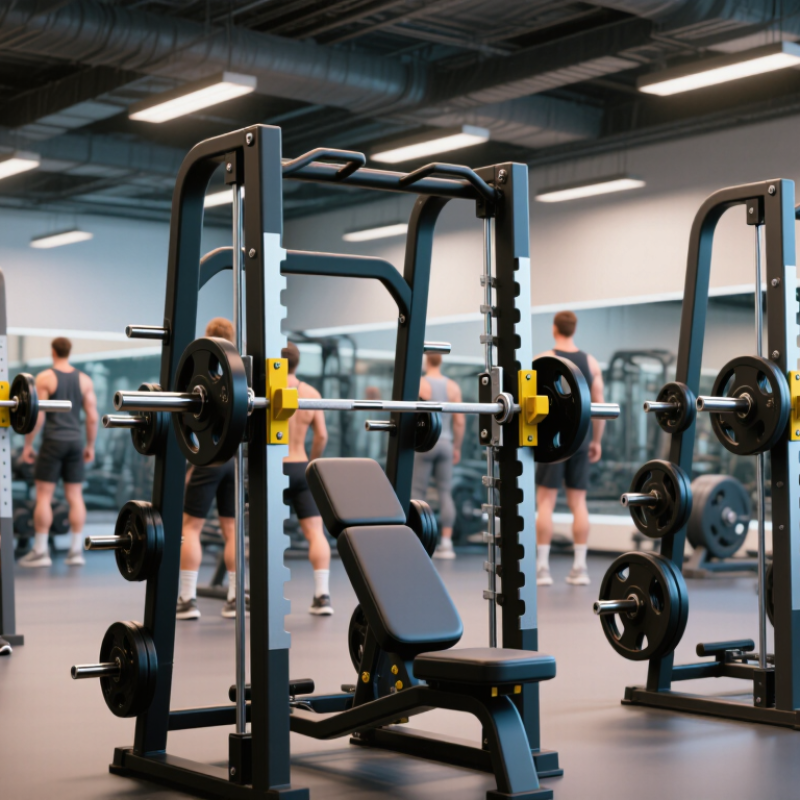
Top China Commercial Smith Machines for Global Buyers

What Defines a Commercial Smith Machine for Global Buyers

Top China Commercial Smith Machines for Global Buyers

What Defines a Commercial Smith Machine for Global Buyers

A commercial Smith machine is more than a heavy steel frame. It must survive repeated daily use, rushed adjustments, and occasional misuse. According to the Health & Fitness Association’s 2024 industry report, 72.9 million Americans belonged to fitness facilities in 2023. That scale puts equipment reliability under constant pressure.

For global buyers, inspect the guide rods, linear bearings, welds, and carriage balance. The bar should move smoothly without side-to-side hesitation. Dual safety catches should adjust quickly, even with sweaty hands.

A practical unit also needs clear load ratings, replaceable wear parts, and corrosion protection for humid gyms. ASTM and EN test references can strengthen technical confidence, but paperwork cannot replace hands-on testing.

Real details matter.

EuropeActive and Deloitte reported 67.6 million fitness members across Europe in 2023. More members mean more users, different body sizes, and less tolerance for downtime. Buyers should check whether the frame supports common Olympic plates and whether spare parts can be shipped internationally. Packaging deserves attention too. A bent guide rod after sea freight can erase an attractive purchase price.

I have seen specifications focus heavily on maximum load. That can be misleading. A machine may hold 300 kilograms but still feel unstable under uneven loading. Noise, maintenance access, and installation time deserve equal review.

Global buyers should request videos, factory inspection records, and sample testing before committing. Even then, selection is not perfect; real gym behavior remains difficult to predict.

Key Features of Top China-Made Commercial Smith Machines

Top China Commercial Smith Machines for Global Buyers

Top China-Made Commercial Smith Machines: Key Features

A commercial Smith machine should feel stable before it feels impressive. High-strength steel frames, reinforced welds, and a wide base reduce unwanted movement during heavy training. Smooth guide rods or linear bearings help the bar travel vertically with less friction. Check the bar path carefully. Small resistance changes can affect user confidence.

Adjustable safety catches are essential for different exercises and body sizes. Look for multiple locking positions, clear markings, and secure engagement. A counterbalanced bar can improve control, but its starting weight must be stated accurately. Some machines feel lighter than expected. That is not always better. Inspect cable routing, pulley alignment, upholstery density, and handle grip materials. These details often reveal long-term manufacturing quality.

Tips: Ask for load-test records, weld inspection details, and material specifications before ordering. Confirm dimensions, packaging protection, installation requirements, and replacement-part support for your market. Request videos showing the bar moving under load. Photos can hide vibration. Also check whether the equipment meets applicable safety standards in the destination country. A clean coating attracts attention, but corrosion resistance, precise assembly, and dependable safety hardware matter more.

How to Compare Safety, Durability, and Performance

For global buyers, safety starts with measurable design, not polished photos. Check the welds. A commercial Smith machine should use enclosed guide rods, secure bar catches, and adjustable safety stops. ISO 20957-1 provides safety requirements for stationary training equipment, while ASTM F2276 addresses fitness-equipment design and performance. Ask suppliers for test records, rated load data, and inspection procedures.

Durability appears in the details users touch daily. Look for thick steel sections, protected bearings, corrosion-resistant finishes, and replaceable liners. A carriage that moves smoothly under light load may bind under repeated commercial use. Request cycle-test results and verify whether the stated load includes the bar. The Health & Fitness Association’s 2024 Global Report estimated 184 million health-club members worldwide, showing why high-use equipment needs stronger service planning. Noise matters. Excessive rattling often signals poor alignment or loose hardware.

Performance should be judged through movement quality, not maximum weight alone. The bar must travel vertically, remain stable, and offer consistent resistance across the full range. Compare counterbalance force, hook spacing, rack positions, footprint, and maintenance access. In my experience, suppliers sometimes provide excellent laboratory figures but weak after-sales documentation. That gap deserves attention. Ask for spare-part availability, warranty terms, installation guidance, and a clear response time. A smaller safety margin may look efficient on paper, yet busy facilities rarely operate under ideal conditions. Test the machine with real users, different heights, and controlled loads before placing a large order.

Top China Commercial Smith Machines for Global Buyers: How to Compare Safety, Durability, and Performance

This normalized benchmark compares the three purchasing dimensions most relevant to commercial facilities. The scores are based on observable specifications such as locking security, frame construction, service-life indicators, load handling, and movement quality. They are intended for supplier comparison rather than brand ranking.

How to read it: Safety should be verified through reliable bar catches, secure adjustment systems, and stable frames. Durability depends on steel construction, weld quality, guide-rod protection, and service support. Performance is influenced by smooth travel, balanced resistance, usable adjustment positions, and load capacity.

OEM, Customization, and Compliance Options from Chinese Suppliers

Top China Commercial Smith Machines for Global Buyers

OEM, Customization, and Compliance Options from Chinese Suppliers

China-based suppliers now offer commercial Smith machines with adjustable racks, counterbalanced bars, cable attachments, and reinforced frames. This flexibility supports gyms, hotels, schools, and rehabilitation facilities. The Global Wellness Institute valued the wellness economy at $6.3 trillion in 2023. It also projects growth toward $9 trillion by 2028. Demand is becoming more professional, but product quality still varies between factories.

OEM projects can include frame dimensions, logo placement, upholstery colors, pulley ratios, and packaging design. Customization should not weaken structural safety. Ask for load testing, weld inspection records, material specifications, and user manuals in clear English. ACSM’s 2025 Worldwide Survey placed traditional strength training among leading fitness trends. That supports long-term demand, yet buyers should avoid treating one market report as a guarantee.

Tips: Request a sample unit or factory video inspection. Confirm the bar’s travel, locking positions, cable smoothness, and emergency stops. For compliance, check ISO 20957 requirements and destination-country rules. Powered accessories may require additional electrical conformity assessment, while a purely mechanical frame may not need the same marking. An independent laboratory can verify test results. A low quotation can hide thinner steel, weaker bearings, or incomplete documents. I would question any supplier promising universal compliance. That claim is rarely precise.

How to Select and Purchase the Right Smith Machine Internationally

Selecting a commercial Smith machine from China requires more than comparing prices. Start with training needs, user weight, available floor space, and expected daily use. Measure ceiling height carefully. A machine may fit on paper but fail after flooring and assembly clearance is added.

Inspect the steel thickness, weld quality, guide-rod alignment, safety hooks, and pulley movement. Ask for load-test records, material specifications, assembly drawings, and maintenance instructions. Confirm whether the bar uses bearings, bushings, or a counterbalance system. Request videos of the actual production line, not only polished showroom images. Small details matter.

International purchasing also depends on logistics. Check packed dimensions, gross weight, shipping terms, spare-part availability, and installation support. Verify required product documents with your local importer or certification body. Commercial facilities may need extra testing or insurance approval. A low quote can still become expensive after customs, repairs, and missing components. I once focused too heavily on frame size and overlooked replacement hardware. That mistake changed my checklist. Now, I ask for serial tracking, warranty response times, and clear responsibility for transit damage. Leave room for doubt. Supplier promises should be matched with records, samples, and a realistic inspection before shipment.

FAQS

What types of facilities can use commercial Smith machines?

They suit gyms, hotels, schools, and rehabilitation facilities. Adjustable racks support different training heights. Reinforced frames handle frequent daily use.

What can buyers customize through an OEM project?

Buyers may request frame dimensions, logo placement, upholstery colors, pulley ratios, and packaging design. Customization should preserve structural safety. Appearance comes second.

What safety records should a buyer request?

Request load-test records, weld inspection results, material specifications, and clear English manuals. Check guide-rod alignment, safety hooks, and cable movement. Records matter more than polished photographs.

How can buyers inspect a supplier before ordering?

Request a sample unit or a live factory video inspection. Watch the bar travel through each locking position. Ask to see the actual production line, not only showroom images.

What space measurements are important before purchase?

Measure floor space, ceiling height, flooring thickness, and assembly clearance. A machine may fit on paper but fail after installation. Leave extra room around moving parts.

How should buyers compare different quotations?

Compare steel thickness, bearings, counterbalance systems, packed dimensions, and gross weight. A low price may hide weaker components or missing documents. Cheap can become expensive.

What shipping and after-sales details need confirmation?

Confirm shipping terms, spare-part availability, installation support, warranty response times, and transit-damage responsibility. Request serial tracking for each unit. Small hardware matters.

What compliance checks may be required internationally?

Check relevant mechanical-equipment requirements and destination-country rules with a local importer or certification body. Powered accessories may need additional electrical assessment. Do not accept universal-compliance promises without evidence.

What mistakes should buyers avoid during evaluation?

Do not rely on one market report or one supplier promise. Match claims with samples, test records, and independent inspection. I once focused too much on frame size and overlooked replacement hardware. That changed my checklist.

Conclusion

Choosing the right Commercial Smith machines for international fitness projects requires more than comparing prices. A commercial-grade model should provide a stable frame, smooth bar travel, dependable bearings, secure locking positions, and durable materials suitable for frequent use. Global buyers should evaluate safety systems, weight capacity, weld quality, corrosion resistance, maintenance requirements, and overall training performance. Clear technical specifications and practical testing can help distinguish reliable equipment from products designed only for light or occasional use.

Chinese suppliers may offer OEM production, customized colors, dimensions, attachments, packaging, and digital displays to match different facility needs. Buyers should also confirm quality-control procedures, product documentation, inspection support, shipping terms, spare-parts availability, and compliance with the regulations of the destination market. A successful purchase depends on defining the intended users and training environment, comparing complete quotations rather than unit prices alone, requesting samples or factory verification when possible, and establishing clear communication throughout production, delivery, and after-sales support.

Clara Bennett

Clara Bennett

Clara Bennett is a marketing professional with a strong understanding of her company’s products, services, and the needs they are designed to meet. She regularly contributes expert articles to the company website, turning detailed product knowledge into clear, useful guidance for customers and......