0%

Choosing a China-based supplier for a Commercial dumbbell storage rack takes more than comparing prices or product photos. A rack may look sturdy online, yet small design details matter in daily use. Consider its steel thickness, weld quality, finish, footprint, and stated load capacity. Ask whether the capacity applies to the full rack or each shelf. Details matter.

This guide introduces supplier considerations for gyms, fitness studios, and equipment distributors evaluating manufacturers in China. It focuses on practical checks: reviewing product specifications, requesting current factory and inspection information, clarifying customization options, and confirming packaging and delivery terms. Where possible, buyers should compare written quotations against samples or detailed drawings. Claims deserve verification.

Supplier directories and online listings can help build a shortlist, but they do not prove production quality or reliability. Verify business details, ask how defects are handled, and request clear answers about materials and quality checks. A low quote may exclude important features, while a polished catalog may leave questions unanswered. That is easy to miss. The best fit depends on the buyer’s space, budget, order volume, and service expectations. No single supplier suits every project. This overview offers a careful starting point for identifying potential Chinese suppliers and asking better questions before making a purchasing decision.
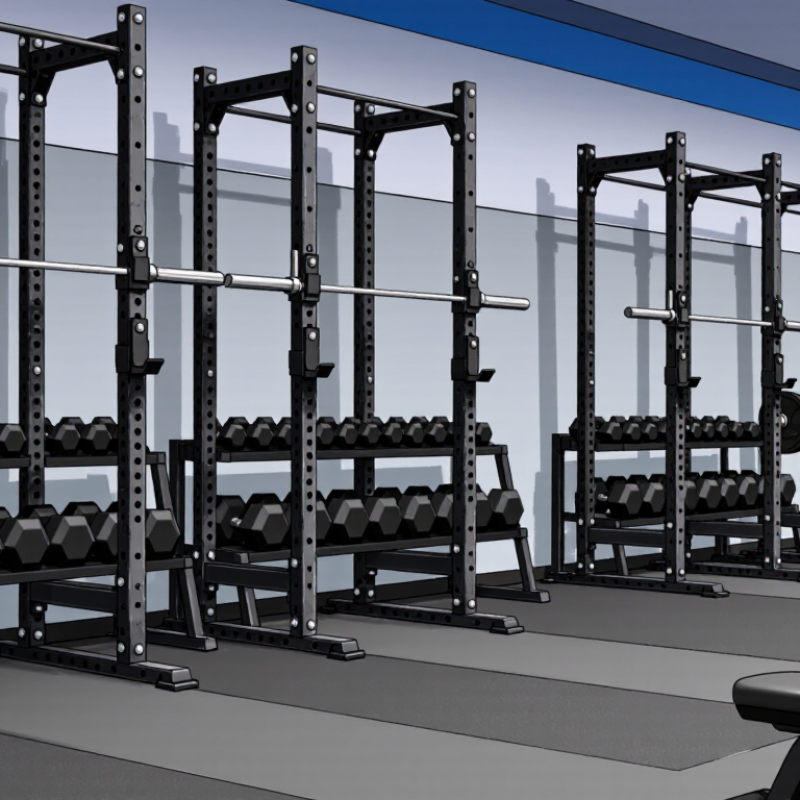
China Top Commercial Dumbbell Storage Rack Suppliers?

Commercial Dumbbell Storage Racks: Types and Key Features

Commercial dumbbell racks generally fall into three formats: two- or three-tier shelves, vertical trees, and modular bays. Tiered racks make weight labels easy to scan and suit busy strength floors. Vertical trees save floor space, but their close-set handles can make heavier dumbbells awkward to lift. Modular bays allow capacity to grow over time. Check the footprint. A rack that fits on paper may block a walkway once users gather around it.

The ACSM’s 2023 Worldwide Survey of Fitness Trends ranked strength training with free weights second among global trends. That finding supports planning for frequent access, not simply maximum storage. Look for a stated load rating, stable feet, smooth welds, and cradles that hold dumbbells without metal-on-metal contact. A shallow angle can improve visibility, while rubber-lined saddles help limit noise and finish wear. Small details matter.

For procurement, compare usable shelf length with the actual dumbbell sizes in the room. Confirm that staff can remove the largest pair without striking an adjacent handle. Ask suppliers for dimensions, load documentation, and care instructions; inspect a sample if possible. A polished coating is reassuring, but it cannot compensate for a poor layout. I would still test the rack with real users before ordering multiple units.

China’s Commercial Dumbbell Rack Supplier Landscape

China’s commercial dumbbell rack supplier landscape includes factory-direct producers, export-focused manufacturers, and fitness-equipment firms with metalworking capabilities. Their resources can differ widely. A polished catalog is not proof of consistent production. Ask for drawings, steel specifications, load-test records, and clear photos of welds. Check that rack dimensions fit the dumbbells and the actual floor plan. Small details matter: handle clearance, rubber feet, smooth edges, and space for cleaning. They are easy to miss.

For a serious comparison, request a sample or inspect a production unit before placing a large order. Confirm packaging, replacement-part support, and how finish defects are handled. Powder coating may look even on one sample but vary across a full batch. Worth checking. Ask how the supplier controls tube thickness and alignment, not only the stated load capacity. Some buyers focus heavily on the lowest quote and overlook freight volume or assembly time. Understandable, but not always economical. Clear answers and measurable criteria help; still, paperwork and a good call cannot replace a physical check.

China’s Commercial Dumbbell Rack Supplier Landscape

Representative commercial rack configurations by dumbbell-pair storage capacity

Commercial racks are commonly configured for different storage needs, from compact units to higher-capacity multi-tier designs. These examples show product configurations, not supplier counts, market shares, or a ranking; capacity varies by rack design and dumbbell dimensions.

How to Evaluate Rack Quality, Capacity, and Safety

When comparing commercial dumbbell rack suppliers, evaluate the rack itself, not just its listed capacity. Ask for the rated load per tier and for the complete unit. A rack holding 500 kilograms overall may still have limits on each shelf. Check that the figures match your dumbbell range and planned layout, with room for future additions.

Inspect the frame, welds, and contact points. Look for clean, continuous welds, straight uprights, and feet that sit firmly on a level floor. Shelves should hold dumbbells without sharp edges or awkward gaps. Ask how the rack is tested and whether assembly instructions specify bolt-tightening checks. Stability matters. A heavy rack can still shift if its load sits unevenly. I would double-check this detail, even when the photos look convincing.

Tips: Request a drawing with dimensions and tier ratings. Confirm the assembled rack fits your room and lifting area. Place heavier dumbbells low, distribute pairs evenly, and inspect fasteners after setup. Small omissions happen; document any unclear rating before ordering.

How to Compare China’s Leading Dumbbell Rack Suppliers

China’s leading commercial dumbbell rack suppliers should be compared on build quality, fit, and consistency, not catalog photos alone. Ask for drawings showing rack width, shelf angle, and usable handle clearance. A two-tier frame may suit a small studio, while a wider three-tier unit can reduce floor clutter in a busy gym. Check steel thickness, weld coverage, and the finish around corners, where chips often begin. Ask how rated capacity was tested, and request the test method in writing. Numbers without context are not very useful.

Request a sample or a detailed inspection video before placing a large order. Look closely at weld seams, bolt holes, rubber contact points, and whether dumbbells sit securely without rocking. Compare packaging too: separated parts, corner protection, and clear assembly instructions can prevent avoidable damage. Ask suppliers to confirm production lead time, inspection steps, replacement-part availability, and what happens if a batch differs from the approved sample. Their answers reveal more than a low quotation. Still, samples have limits. One sample cannot prove every production run will match. A small checklist helps, but leave room for judgment. A neat spreadsheet will not spot every rough edge.

What Buyers Should Verify Before Placing an Order

Before ordering a commercial dumbbell rack, request a dimensioned drawing, rated load per tier, and total rated capacity. Check whether the rating applies to evenly distributed weights, not a single concentrated load. Ask for the steel thickness, weld details, and coating specification. A glossy finish proves little. Request clear photos of welds and feet, plus a load-test record tied to the rack’s model and production batch. The ACSM 2024 Worldwide Survey of Fitness Trends ranked traditional strength training fifth among 45 trends, signaling sustained demand for strength-focused facilities. That makes durable, accessible storage a practical purchasing concern, not just a showroom detail.

Verify that the rack fits your actual dumbbell range and aisle layout. Measure handle lengths, head shapes, and floor clearance; small mismatches can cause crowded tiers or awkward lifts. Ask suppliers how they check stability on uneven floors and protect packaging during shipment. Confirm lead time, spare-part availability, warranty exclusions, and the inspection process for damaged deliveries in writing. Request a sample unit or a live video inspection when feasible. One point buyers sometimes overlook: a strong rack can still be a poor fit if staff cannot reload it safely. Compare written specifications with the delivered unit, and keep photos of labels, welds, and packaging. A catalog may omit details; ask again.

China Top Commercial Dumbbell Storage Rack Suppliers? - What Buyers Should Verify Before Placing an Order
Verification Area What to Confirm Evidence to Request Warning Sign Buyer Action Before Ordering
Load Capacity Confirm the rated load for the complete rack and for each shelf or tier. Check whether the rating applies to evenly distributed loads or concentrated loads. Written load specification, test method, test results, and the conditions under which the rating applies. A capacity figure is provided without stating whether it is per shelf or per rack, or without explaining the test conditions. Compare the documented rating with the dumbbells’ total weight and expected placement. Set the required capacity in the purchase specification.
Product Dimensions and Fit Verify overall length, width, height, shelf depth, usable storage width, and clearance between tiers. Confirm whether dimensions are for the assembled product. Dimensioned drawing, product specification sheet, and photographs or video showing the rack assembled. Only approximate dimensions are available, or drawings do not identify measurement points and tolerances. Measure the intended installation area and the dumbbells. Confirm access, user clearance, and any space needed for assembly.
Steel and Construction Check the specified steel type or grade, tube or sheet dimensions, joint design, weld locations, and reinforcement details. Bill of materials or material specification, production drawings, and clear close-up images of joints and welds. Material descriptions are vague, or the supplier will not confirm construction details in writing. Include material and construction requirements in the approved specification; confirm that any substitutions require written approval.
Stability and Floor Protection Review the rack’s base design, expected stability under the intended load, and whether floor-contact points include protective feet or pads. Assembly instructions, base and foot details, and stability-test information relevant to the proposed configuration. The rack rocks on a level surface, has no clear assembly guidance, or the base details differ from the approved drawing. Ask how the rack should be assembled and positioned. Check whether anchoring is required or recommended for the intended use.
Finish and Corrosion Protection Confirm the finish type, surface preparation, color, and how scratches or coating damage are handled. Consider the storage environment and cleaning routine. Written finish specification, approved color sample, and coating or corrosion-test documentation if required for the project. Finish descriptions such as “high quality” are not supported by a defined specification or sample approval. Approve a physical sample or documented finish reference before mass production, and define acceptable cosmetic defects.
Quality Control Ask how incoming materials, dimensions, welding, coating, assembly, and final packing are inspected. Inspection checklist, sample inspection records, defect-handling procedure, and pre-shipment inspection arrangements. Inspection is described only as “checked before shipment,” with no records, criteria, or agreed inspection scope. Agree on inspection criteria, sampling approach, and who may inspect the order before shipment.
Samples and Production Consistency Verify that the approved sample matches the production specification and that the supplier will not change materials or design without approval. Signed sample approval record, final drawing, and written change-control terms. The sample, quotation, and production drawing show different dimensions, components, or finishes. Use the approved drawing and sample reference as part of the purchase order and retain copies for inspection.
Packaging and Shipping Protection Confirm packaging method, protection for corners and coated surfaces, carton or pallet details, and whether assembly hardware is secured and labeled. Packaging specification, packing photos, and a packing list identifying packages and included components. Packaging details are missing, or parts likely to rub together are not separated or protected. Specify packaging and labeling requirements. Confirm the number of packages and the process for reporting transit damage.
Compliance and Documentation Determine which product, material, or market requirements apply to the destination and intended commercial use. Do not assume one certificate covers every market. Relevant test reports or declarations, with product model, issuing organization, test scope, and date clearly identified. A certificate is presented without a matching model or scope, or a general claim is made without supporting documents. Check applicable requirements with the importer or qualified compliance professional and verify documents with the issuer when needed.
Lead Time and Order Terms Clarify production lead time, shipping terms, payment milestones, order quantity, and what happens if agreed specifications are not met. Detailed quotation, pro forma invoice, production schedule, and written commercial terms. Important terms are discussed only verbally or are inconsistent across the quotation and invoice. Make the approved specification, delivery schedule, inspection terms, and remedy process part of the written order documents.
Warranty and After-Sales Support Check warranty duration, covered defects, exclusions, claim process, and availability of replacement parts such as feet or fasteners. Written warranty policy and a clear procedure for submitting claims with photographs or inspection records. Warranty promises are not documented or do not explain how claims are assessed and resolved. Confirm warranty terms before payment and keep order records, photographs, and inspection documents for future claims.

FAQS

Should I judge a dumbbell rack by its total capacity alone?

No. Ask for both the complete rack rating and the load limit for each tier. A 500-kilogram total rating may hide shelf limits.

What should I inspect on the rack frame?

Check straight uprights, continuous welds, and feet that sit firmly on a level floor. Look closely at corners and contact points.

How can I confirm the rack fits my gym?

Request a dimensioned drawing with rack width, shelf angle, and handle clearance. Measure the room and lifting area before ordering.

What makes a shelf suitable for dumbbells?

Dumbbells should sit securely, without rocking, sharp edges, or awkward gaps. Test the fit with the dumbbell sizes you plan to store.

How should I assess a supplier’s capacity claims?

Ask for the testing method in writing, not just a number in a catalog. Numbers without context are hard to compare.

Is a sample enough to confirm production quality?

A sample can reveal rough welds, bolt-hole issues, and weak packaging. But one sample cannot prove every production run will match.

What details should I check before a large order?

Request an inspection video or sample. Confirm lead time, inspection steps, replacement-part availability, and how differences from the approved sample are handled.

How can I improve stability after assembly?

Place heavier dumbbells on lower tiers and distribute pairs evenly. Check bolt tightness after setup. Small details are easy to miss.

Conclusion

This article explores the main types of Commercial dumbbell storage rack, including tiered, vertical, and modular designs, and explains how features such as durable materials, stable construction, protective finishes, and space-efficient layouts can support everyday commercial use. It also provides an overview of China’s supplier landscape, helping buyers understand the range of manufacturing and customization options available without focusing on specific brands.

To compare suppliers effectively, buyers should assess rack capacity, dimensions, load distribution, workmanship, stability, and safety features alongside pricing and production capabilities. Before placing an order, they should verify product specifications, material details, quality-control procedures, packaging, delivery timelines, and after-sales support. These practical checks can help gyms and equipment distributors choose a rack that fits their space, usage needs, and budget while reducing the risk of mismatched specifications or avoidable purchasing issues.

Clara Bennett

Clara Bennett

Clara Bennett is a marketing professional with a strong understanding of her company’s products, services, and the needs they are designed to meet. She regularly contributes expert articles to the company website, turning detailed product knowledge into clear, useful guidance for customers and......