0%

A busy gym can feel organized until the plates pile up beside a bench. A 45-pound plate left on the floor narrows a walkway. Smaller plates can disappear behind larger ones. These everyday problems make storage more than a finishing touch. A well-chosen Weight plate storage tree can keep plates visible, accessible, and off the training floor.

The Health & Fitness Association’s 2024 U.S. Health & Fitness Consumer Report recorded 72.9 million Americans belonging to a fitness facility in 2023, a record high. That figure does not measure equipment needs directly. It does, however, reflect the scale of today’s fitness market, where practical floor planning matters. In gyms with frequent traffic, a storage unit should match the plates, the available space, and the way members actually train.

This guide compares weight plate storage trees for commercial and home gyms. We’ll look at capacity, sleeve spacing, frame stability, footprint, and compatibility with common plate sizes. We’ll also consider whether wheels help or create unwanted movement. Small details matter. A compact tree may save floor space but make plates harder to remove. A heavier frame may feel reassuring, yet still occupy valuable room. No single model suits every gym. Our comparisons aim to clarify the trade-offs, though real-world setup and maintenance can affect performance.
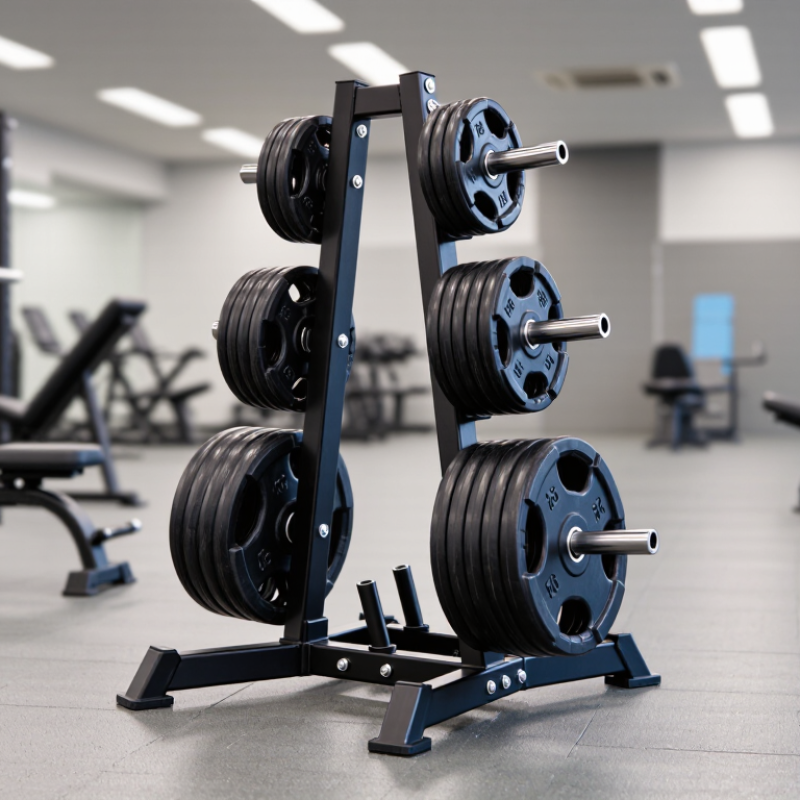
2026 Best Weight Plate Storage Tree for Gyms?

What a Weight Plate Storage Tree Is and How It Works

A weight plate storage tree is a freestanding rack with a weighted base and projecting pegs. Plates slide onto the pegs through their center holes, keeping them off the floor and close to the lifting area. The design is simple: the base resists tipping, while the pegs separate plates by size or weight. A 2025 ACSM Worldwide Fitness Trends survey ranked traditional strength training fifth, reflecting its continued place in fitness programs. Organized plate storage can make that training space easier to use, though a tree does not replace careful loading or supervision.

Pegs may fit standard or Olympic-sized plates, so check the hole diameter before buying or setting up a rack. Load heavier plates low when the layout allows, and distribute weight evenly across the base. This helps keep the tree stable as plates are removed. Check for sharp edges, loose fasteners, and enough clearance to lift plates without striking nearby equipment. One detail is easy to miss: a crowded rack can still be awkward, even when every plate has a place.

Tips: Return plates gently, rather than dropping them onto the pegs. Keep the floor around the base clear, and avoid exceeding the rack’s stated capacity. If the tree rocks when loaded, stop using it until you identify the cause. A tidy setup helps—but it is not automatically a safe one.

Main Types of Weight Plate Storage Trees for Gyms

Main Types of Weight Plate Storage Trees for Gyms

A vertical pin tree holds plates on upright posts, keeping them easy to sort by size. It suits compact training areas, but loaded plates can make a narrow base feel top-heavy. Check the frame’s weight rating and footprint before placing it near busy walkways. Stability matters.

A horizontal peg rack stores plates on arms extending from a low frame. The lower center of gravity can feel reassuring when several plates are loaded. However, long pegs may project into shared floor space, and crowded arms can make smaller plates awkward to remove. Measure twice.

A-frame trees lean storage pegs outward from a central structure. Their angled layout can make plate sizes visible at a glance, though the base may occupy more floor space than expected. Wall-mounted racks keep plates off the floor and free up training space, but they require a suitable wall and secure installation. Not every wall is ready for that job. For any style, compare peg length with the plates’ center holes, and leave room to lift plates without twisting. A rack that looks tidy in a product photo may feel cramped beside a bench.

Main Types of Weight Plate Storage Trees for Gyms

Representative storage-peg counts by common design. Configurations vary by model; these are examples, not a standardized capacity rating.

Vertical trees and horizontal racks keep plates organized on freestanding frames, while wall-mounted racks save floor space. Combo trees typically include additional storage for bars or accessories.

Key Features to Compare When Choosing a Storage Tree

A storage tree earns its floor space when plates are quick to reach and stable between sessions. ACSM’s 2025 Worldwide Fitness Trends survey ranked traditional strength training sixth. That supports planning for regular plate handling, not just a tidy-looking corner. Compare the tree’s rated load with the total weight you expect to store, and check whether its posts fit your plate-hole diameter. A poor fit can make loading awkward. Small details matter.

Look at footprint, base width, weld quality, and finish. A broad, level base helps resist rocking when plates are removed from one side. Measure the aisle with the tree loaded; handles and plate edges can protrude farther than expected. Check that the rack’s stated capacity applies to the whole unit, not each post. Also consider plate order: heavier discs near the base are easier to lift and place. I still find that capacity labels are easy to overlook.

Tips: Before buying, mark the tree’s footprint on the floor with tape. Test the walk path and leave room to lift plates without twisting. If staff move plates often, prioritize clear post spacing over a compact design. A neat rack can still be inconvenient.

How to Match Storage Capacity to Gym Needs

Choosing a weight plate storage tree starts with a plate inventory, not a guess about rack size. Record every plate’s weight, diameter, and quantity, then calculate the total load the tree must support. A facility with six pairs of 20-kilogram plates needs different capacity from a home gym with mixed, lighter sets. Check the manufacturer’s stated load limit and peg spacing, too. Plates should slide on without scraping nearby plates or blocking a walkway.

The Health & Fitness Association’s 2024 Global Report estimated 184 million health club members worldwide in 2023. That figure describes a broad industry, not the traffic at any single gym. Still, it is a reminder that storage needs vary sharply by facility. A busy strength room may need separate pegs for commonly used plates, so members can re-rack them quickly. Smaller studios can often prioritize a compact footprint. Measure the actual stack. Then test access during a busy session, not just when the room is empty.

Plan for growth, but avoid buying capacity that consumes useful floor space. Leave room to grow. A practical estimate adds the plates the gym expects to acquire, then checks whether the loaded tree remains stable and easy to use. This is only a planning rule; plate shapes, storage habits, and peak traffic complicate it. I have seen neat capacity calculations fail when bumper plates crowd a narrow corner. Recheck the layout after installation, with the heaviest plates stored as directed.

Safe Setup, Loading, and Maintenance Practices

A weight plate tree is only safe when its base sits flat on a firm, level floor. Before loading it, check that bolts are tight and welds show no cracks or sharp damage. Leave clear space around the frame so plates can be removed without twisting or striking nearby equipment. Small details matter. A tree that rocks when empty should not be loaded until the cause is corrected.

Place heavier plates on lower pegs and distribute weight across both sides when the design allows it. Keep each plate fully seated against the peg, with enough room to grip it securely. Never exceed the stated load capacity, and do not assume every peg can carry the same weight. That assumption is easy to make. Avoid moving a loaded tree unless it is specifically designed for that use; shifting weight can make it unstable. During routine cleaning, look for loose fasteners, bent pegs, rust, and floor damage beneath the base. Wipe away sweat and moisture, then let surfaces dry. Record recurring issues, even minor ones, because small changes can reveal a developing problem.

FAQS

What is a weight plate storage tree?

It is a freestanding rack with a weighted base and pegs. Plates slide onto the pegs through their center holes, keeping them off the floor.

How can I check whether plates fit the pegs?

Compare the peg size with each plate’s center-hole diameter. Test the fit before loading several plates. A tight fit can make re-racking awkward.

Where should heavier plates go?

Place heavier plates low when the rack’s layout allows. Distribute the load evenly, and follow the rack’s stated capacity. Stability matters.

What type of storage tree suits a compact gym?

A vertical pin tree can use less floor space. Check its footprint and weight rating, since a narrow loaded rack may feel top-heavy.

Are horizontal peg racks a good choice?

Their low frame can feel stable with several plates loaded. Long pegs may extend into walkways, so measure the area around the rack.

What should I measure before choosing a rack?

Record plate weights, diameters, and quantities. Check the total load, peg spacing, and space needed to lift plates without twisting.

How much storage capacity should I plan for?

Start with your current plate inventory, then allow for realistic growth. Avoid a rack that takes up useful floor space. Estimates can miss busy-hour crowding.

What should I check after setting up the tree?

Look for loose fasteners, sharp edges, and clear lifting space. Return plates gently. If the rack rocks, stop using it until you find the cause.

Conclusion

A Weight plate storage tree is a compact way to organize gym plates, keep them accessible, and reduce clutter around training areas. This guide explains how a storage tree supports plate loading and storage, then compares common designs, including differences in footprint, post arrangement, mobility, and intended use. It also highlights practical features to consider, such as construction, stability, sleeve dimensions, and the number and size of plates the unit can accommodate.

Choosing the right capacity starts with assessing the gym’s current plate collection and allowing room for future needs, while balancing storage space against available floor area. The guide also covers safe setup and everyday care: place the tree on a level surface, distribute plates evenly, load and remove them with control, and check the frame and fittings regularly for wear or looseness. These considerations help create an organized, dependable storage setup for a range of gym environments.

Elara Thompson

Elara Thompson

Elara Thompson is a seasoned marketing professional with a strong understanding of product strategy, customer needs, and digital communication. As a key contributor to our company, she regularly updates the corporate website with insightful blog articles that explain industry trends, product......