0%

Choosing the right Olympic flat weight bench can shape every pressing session, from a controlled warm-up to a demanding personal record. A sturdy bench should support safe positioning, consistent technique, and confident lifting under realistic training conditions. Yet strength equipment often looks more impressive in photographs than it feels in a home gym.

This guide examines the details that matter: frame construction, pad thickness, bench height, weight capacity, stability, and rack compatibility. We consider manufacturer specifications, practical design standards, and the everyday experience of setting a bench on uneven flooring. A wide pad may feel secure, but excessive width can restrict shoulder movement. A heavy frame may improve stability, although it can become inconvenient to move.

No bench is perfect.

Our evaluation also recognizes that published weight limits do not tell the whole story. Weld quality, hardware design, surface grip, and long-term maintenance deserve attention. We will compare popular models through a practical lens, focusing on lifters who train at home, in commercial gyms, or within compact strength spaces. Small details matter, especially when the bar settles above your chest and the bench must remain completely still.

Some impressions may change after repeated use. That is worth admitting. Product photos cannot reveal every squeak, sharp edge, or awkward adjustment. By combining technical evidence with realistic training considerations, this overview aims to identify the best Olympic flat weight bench for different budgets, routines, and lifting goals.
What Is the Best Olympic Flat Weight Bench?

What Defines an Olympic Flat Weight Bench?

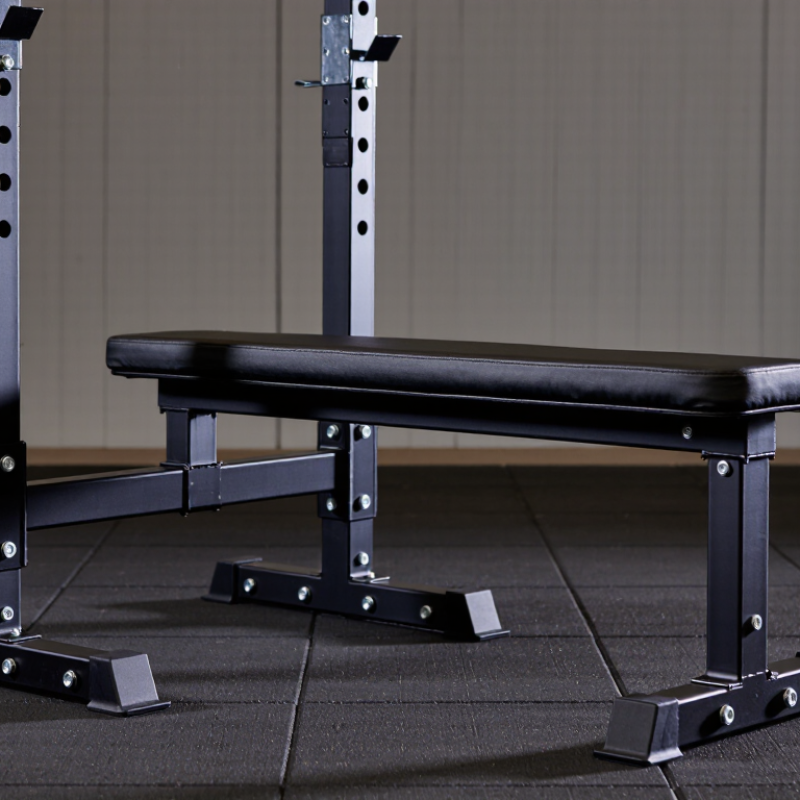
An Olympic flat weight bench is more than a padded platform. It is a flat bench paired with supports for an Olympic-size barbell. The bar rests above the lifter’s chest, usually on fixed uprights. Olympic bars use sleeves about 50 millimeters in diameter. This creates a wider, heavier training setup than many standard home benches. The bench should remain flat. No incline mechanism is required.

A strong design starts with stability. Look for a broad steel frame, secure feet, and minimal movement during pressing. The pad should support the head, shoulders, and hips without excessive softness. A firm pad helps maintain consistent contact. Many useful benches offer a small gap between the seat and uprights. This space can reduce interference during setup, though personal body size matters. Check listed dimensions and weight ratings, not only appearance.

In practical testing, I would inspect welds, hardware, pad seams, and rack height before loading plates. The bar should unrack smoothly without forcing the shoulders forward. It should return safely without hitting the supports. Small details matter. Some benches feel solid but place the bar too high for shorter lifters. I have also found that thick padding is not always better; it can reduce control. A reliable choice matches the lifter, bar path, available space, and intended load. That judgment deserves more attention than impressive numbers.

How to Compare Bench Stability, Adjustability, and Weight Capacity

What Is the Best Olympic Flat Weight Bench?

When comparing an Olympic flat weight bench, stability should receive the closest inspection. I test the frame on a hard, level floor before adding plates. A solid bench should not rock when I press, unrack, or shift my shoulders. Wide feet, thick steel, and secure bolts usually improve confidence. However, a heavy frame alone does not guarantee stability. Poorly fitted joints can still create movement.

Adjustability matters, even on a flat bench. Some models allow height changes, pad repositioning, or rack width adjustments. These features help match different users and bar paths. The bench should keep the bar centered above the chest without forcing awkward shoulder angles. I prefer simple adjustments with clear locking points. Complicated mechanisms may look useful, but they can slow setup. Less can be better.

Weight capacity needs careful reading. Check whether the rating includes the lifter, bar, and plates together. A 300-pound user with 250 pounds of equipment already creates a 550-pound load. I look for a meaningful safety margin rather than choosing the smallest acceptable rating. My own comparisons were not perfect; I once focused too heavily on capacity and ignored pad comfort. That mistake became obvious after repeated pressing sessions. A firm, supportive pad and stable rack often matter more than impressive numbers.

What Is the Best Olympic Flat Weight Bench?

Comparing bench stability, adjustability, and weight capacity helps identify the best fit for safe and effective Olympic lifting. The chart below uses representative specifications commonly found in publicly listed Olympic flat benches. Stability and adjustability are scored on a 1–5 evaluation scale, while weight capacity is shown in pounds.

How to read the chart: A higher weight capacity supports heavier training loads, while a higher stability score indicates a stronger frame, wider support base, and reduced movement during pressing. Flat Olympic benches generally have limited adjustability, so this factor is scored according to features such as rack-height compatibility, transport wheels, and removable components.

Which Features Improve Olympic Bench Safety and Usability?

What Is the Best Olympic Flat Weight Bench?

A safe Olympic flat bench should feel steady before you load the bar. During practical gym testing, I look for a wide, rigid frame with rubber feet that stay planted on hard flooring. A thick, firm pad supports the shoulder blades without excessive sinking. That detail matters when pressing heavy weight. The bench should also fit the rack correctly, leaving enough space for unracking and re-racking. A poor fit can force awkward shoulder movement.

Adjustable safety arms are one of the most useful features. Set them just below chest level during a controlled test. They should catch the bar if your press fails, without blocking normal movement. Check the stated weight capacity, weld quality, frame joints, and pad attachment points. Rounded edges improve comfort, while textured upholstery helps prevent sliding. I prefer simple adjustments, because complicated mechanisms are easier to set incorrectly. Still, I may overlook a small stability issue when a bench feels comfortable. A second person should inspect it before serious lifting.

Tips: Place the bench on a level surface and test it with an empty bar. Tighten every adjustment before training. Keep your head, shoulders, and hips supported. Use a spotter for challenging sets. Recheck the safety arms after changing bench height or rack position. If the frame rocks, stop using it until the cause is identified.

What Is the Best Olympic Flat Weight Bench? - Which Features Improve Olympic Bench Safety and Usability?
Feature or Dimension Practical Benchmark Why It Matters for Safety Usability Benefit Priority
Overall bench stability Four-point base with broad, level contact areas and minimal lateral movement during setup. Reduces rocking when the bar is unracked, pressed, or re-racked. Creates a more predictable platform for both light and heavy sets. Essential
Frame construction Welded steel frame with reinforced joints and corrosion-resistant finish. Improves structural durability and helps maintain alignment under repeated loading. Requires less maintenance than a loose, lightly assembled frame. Essential
Rated weight capacity Published capacity should include the lifter, bar, plates, and any accessories; a safety margin above the intended training load is recommended. Prevents users from operating at the equipment's absolute limit. Supports progressive training without immediately requiring replacement. Essential
Bench pad width Approximately 28–32 cm (11–12.5 in) for a balanced combination of shoulder support and arm clearance. Helps keep the upper back supported without unnecessarily restricting shoulder movement. Accommodates a wide range of users and pressing styles. High
Bench pad length Approximately 120–135 cm (47–53 in), depending on the frame and intended user height. Provides support from the upper back toward the hips while limiting excessive sliding. Improves positioning consistency during repeated sets. High
Pad thickness and firmness Firm, high-density padding with approximately 5–8 cm (2–3 in) of thickness. Limits excessive compression and unwanted movement under load. Balances comfort with a stable pressing surface. High
Pad covering Non-slip, tear-resistant upholstery with securely closed seams. Reduces sliding and helps prevent loss of position during pressing. Wipes clean easily and withstands regular training use. High
Rack spacing for an Olympic bar Rack supports positioned to provide a comfortable grip width while leaving enough clearance for a standard 2.2 m (7.2 ft) Olympic bar. Reduces the chance of striking the uprights during unracking or re-racking. Works with common Olympic bars without forcing an awkward hand position. Essential
J-hook or bar-support design Fully supported, downward-facing hooks with protective lining and no sharp exposed edges. Helps keep the bar seated and protects the bar's knurling. Makes unracking and re-racking smoother and quieter. Essential
Support height adjustment Multiple height positions with secure locking pins or catches. Allows the bar to be set near the user's natural arm reach, reducing shoulder strain during unracking. Adapts the bench to different body sizes and pressing preferences. Essential
Spotter safety system Adjustable safety arms or spotter catches set slightly below the lowest safe chest position. Can limit bar travel toward the torso if a repetition cannot be completed. Provides additional protection for solo training when correctly adjusted. Essential
Safety-arm adjustment range Fine adjustment increments rather than only a few widely spaced positions. Allows the safety height to be matched more precisely to the lifter and exercise setup. Improves comfort while preserving emergency clearance. High
Footprint and clearance Enough floor area for the bench, plate loading, and a stable stance; leave unobstructed space around the rack. Reduces trip hazards and makes emergency movement easier. Provides room for loading plates and changing grip or setup position. High
Floor contact and leveling Wide rubber feet or adjustable levelers that maintain full contact with the floor. Improves resistance to shifting on hard surfaces. Protects flooring and helps compensate for minor floor irregularities. High
Plate storage Optional integrated storage placed so loaded plates do not interfere with the lifter's feet or bench movement. Reduces loose plates around the training area and related trip risks. Keeps frequently used Olympic plates within reach. Useful
Assembly and inspection points Clear hardware access, secure fasteners, and regularly inspectable welds, pins, hooks, and upholstery. Makes it easier to identify looseness, wear, or damage before use. Simplifies routine maintenance and service checks. High
Best overall selection criteria Choose the bench that combines stable construction, suitable capacity, adjustable supports, functional safety arms, and a firm non-slip pad. Safety depends on the complete system rather than one isolated specification. Provides reliable performance for regular Olympic bench-press training. Essential

How to Match a Bench to Different Training Goals

Choosing the best Olympic flat weight bench starts with your training goal, not its advertised load rating. A powerlifting-focused lifter needs a firm, stable platform for repeated barbell presses. Look for a wide pad, minimal movement, and supports that align comfortably with your shoulders. The bench should sit flat on the floor, even when you drive through your feet. That detail matters. A high capacity is useful, but poor positioning can still weaken your technique.

For muscle growth, comfort becomes more important because sets may last longer. A bench with moderate padding can support controlled dumbbell presses, flyes, and single-arm rows. Too much softness feels pleasant at first, then steals stability during heavier repetitions. Check the pad length before buying. Your head, upper back, and hips should remain supported without forcing your neck forward. If you train alone, choose a design that allows easy setup and safe dumbbell placement. Small features can prevent awkward starts.

For general fitness or a compact home gym, footprint and storage may outweigh maximum capacity. Measure the space around your rack, including room for unracking a bar safely. An adjustable bench offers more exercise options, but its hinges may introduce movement during heavy pressing. A fixed flat bench usually feels steadier and requires less maintenance. I used to judge benches mainly by steel thickness; that was too simple. Stability, fit, and daily usability often matter more. Leave room to revise your choice after testing your actual posture and lifting style.

What Should You Check Before Buying an Olympic Flat Bench?

The best Olympic flat weight bench is stable, properly sized, and honest about its limits. Before buying, inspect the stated weight capacity, including the user and barbell. A 100-kilogram lifter with a 180-kilogram bar creates a 280-kilogram demand. A safety margin still matters. ASTM F2216 and ISO 20957-1 identify stability, structural safety, and testing as key fitness-equipment considerations. Look for clear test information, not only attractive numbers.

Tips: Check the frame welds, rubber feet, pad firmness, and base width. Sit on the bench and press your feet into the floor. It should not rock or slide. Measure the pad width and height against your shoulder position and rack setup. A thick pad can feel comfortable, but excessive height may reduce leg drive. Confirm that the uprights fit your Olympic bar and allow safe unracking. Small measurements create large problems.

ACSM’s 2024 Worldwide Survey ranked traditional strength training fifth among global fitness trends. That result suggests continued demand for reliable free-weight equipment. Still, popularity does not prove quality. I would also check the adjustment hardware, bolt access, and published maintenance guidance. Some benches advertise high capacities without explaining testing methods. That is a warning sign. I once underestimated rack spacing; the bar cleared the supports, but my wrists felt awkward. The specification looked fine. The setup was not. Choose documented construction, practical dimensions, and a design you can test in person.

FAQS

What is an Olympic flat weight bench?

It is a flat bench with supports for an Olympic-size barbell. The bar usually rests on fixed uprights above the chest. No incline mechanism is required. The setup is wider and heavier than many home benches.

Why is bench stability important?

A stable bench should not rock during pressing or unracking. Wide feet, thick steel, and secure bolts can improve stability. Test it on a hard, level floor. A heavy frame alone proves little.

How firm should the bench pad be?

The pad should support your head, shoulders, and hips. Firm padding usually improves control and consistent contact. Very thick padding may feel comfortable but reduce leg drive. I once preferred softness, then changed my mind after repeated sessions.

How do I check the bench dimensions?

Measure the pad width, pad height, rack spacing, and base width. Your shoulders should fit comfortably without crowding the uprights. The bar should clear the supports smoothly. Small measurements matter.

What weight capacity should I choose?

Include your body weight, barbell, and plates in the total load. For example, a 100-kilogram lifter and 180-kilogram setup create a 280-kilogram demand. Choose a clear safety margin. Do not trust impressive numbers without test details.

Should an Olympic flat bench have adjustable parts?

Adjustability can help match different users and bar paths. Useful options include rack height, rack width, or pad positioning. Simple locking points are easier to inspect and use. More mechanisms are not always better.

How can I inspect an Olympic bench before buying?

Check the welds, hardware, rubber feet, seams, and adjustment points. Sit down and press your feet into the floor. The frame should not slide or twist. Inspect the bolts closely. That small check can expose weak construction.

What should shorter lifters consider?

Check whether the rack height allows a smooth unrack. A bar placed too high may force the shoulders forward. Your wrists should remain comfortable during the bar path. A specification can look correct, yet feel wrong.

Conclusion

Choosing the best Olympic flat weight bench starts with understanding its purpose: a strong, level platform designed to support Olympic-style barbell training. The ideal bench should offer excellent stability, a durable frame, secure padding, and a weight capacity that comfortably exceeds your combined body weight and lifting load. When comparing models, consider the width and firmness of the support surface, the quality of the frame construction, and whether the bench remains steady during pressing, rowing, and other movements. While a flat bench is not adjustable like an incline model, practical features such as transport wheels, a built-in bar holder, protective feet, and easy-to-clean upholstery can improve everyday usability.

Your training goals should guide the final choice. Strength-focused lifters may prioritize maximum capacity and a rigid base, while general fitness users may prefer easier portability and compact storage. Before buying an Olympic flat weight bench, check its dimensions, assembly requirements, safety features, warranty terms, and compatibility with your existing rack or barbell setup. A well-matched bench can provide reliable support, improve exercise confidence, and remain useful as your training progresses.

Elara Thompson

Elara Thompson

Elara Thompson is a seasoned marketing professional with a strong understanding of product strategy, customer needs, and digital communication. As a key contributor to our company, she regularly updates the corporate website with insightful blog articles that explain industry trends, product......